Blue-tailed Damselfly
Ischnura elegans
Print fact sheet (PDF)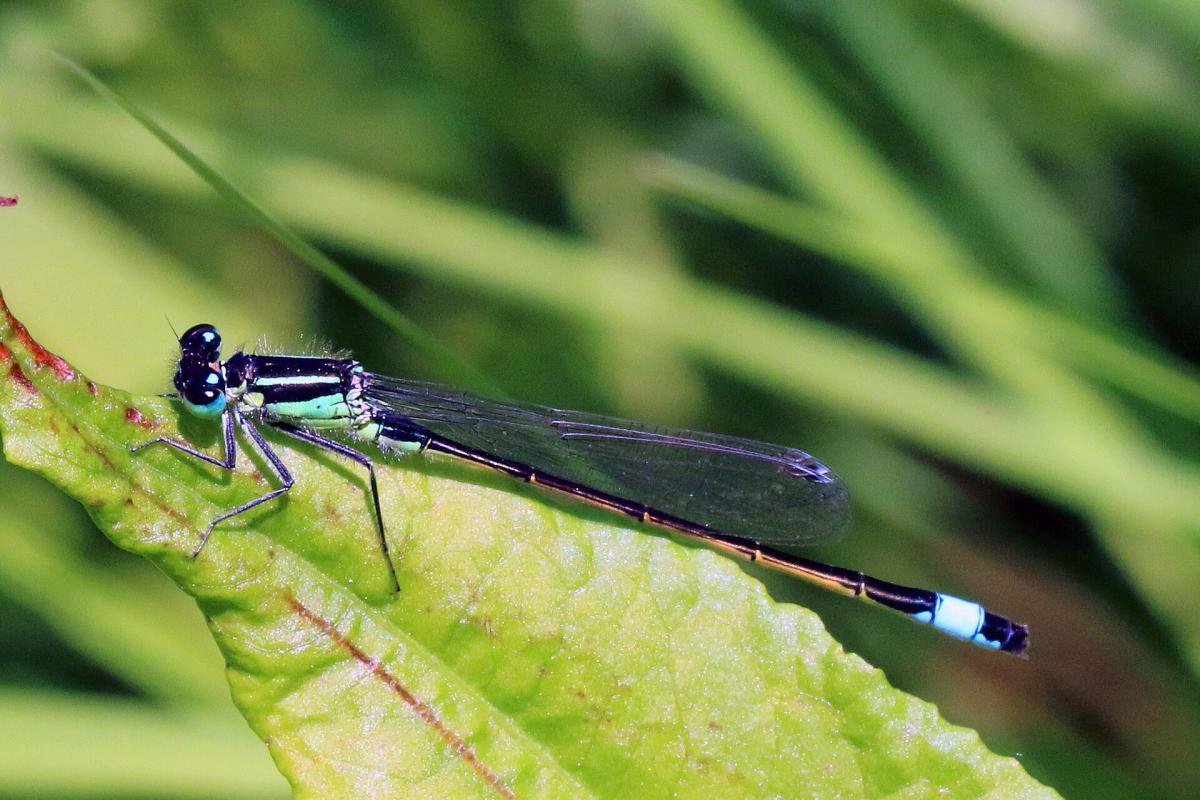
Almost entirely black, with a single bright blue segment near the tail — like a lit match head.
A dark, slender damselfly, black along most of the abdomen with one vivid blue segment near the tip, giving a distinctive matchstick look. Females come in several colour forms — blue, violet, pink, olive and brown — which regularly confuses identification. It is one of the most tolerant damselflies, found at ponds, ditches, canals and even brackish or lightly polluted water around Dumfries.
Behaviour
Blue-tailed damselflies tolerate conditions many other species will not, including nutrient-rich and slightly brackish water, which is why they turn up in urban ponds and farm ditches. They fly weakly and low among vegetation and perch frequently. The multiple female colour forms are thought to reduce harassment by males, since only one form is recognised as a mate.
When to see it
Quick facts
- Family
- Narrow-winged damselflies (Coenagrionidae)
- Size
- Body 29–34 mm
- Status
- Native; common and notably tolerant of poor water quality
Photo by Charles J. Sharp, CC BY-SA 3.0, via Wikimedia Commons