Cinnabar Moth Caterpillar
Tyria jacobaeae caterpillar
Print fact sheet (PDF)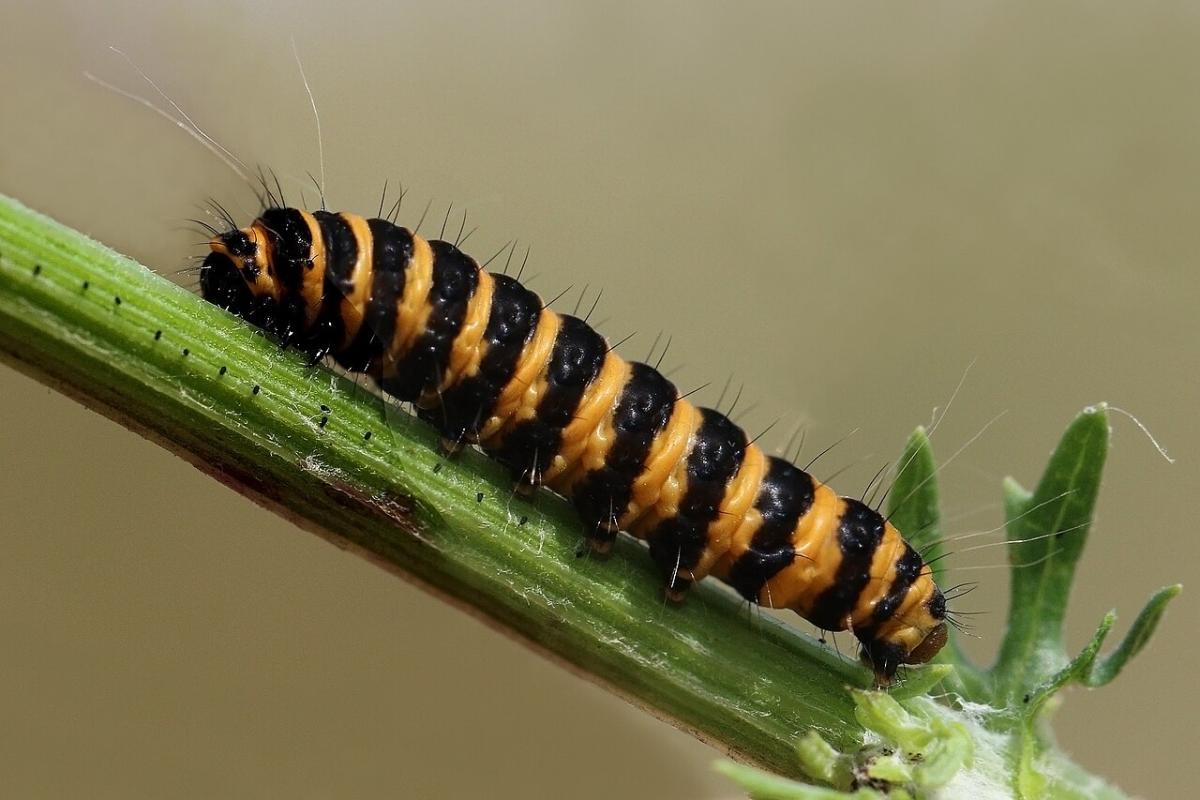
Black-and-orange stripes that mean exactly what they say — don't eat me.
Few caterpillars announce themselves as boldly as this one. From July into September, ragwort plants across Dumfries verges, pastures and waste ground turn into feeding stations for gangs of black-and-orange striped larvae, the unmistakable young of the cinnabar moth. The banding isn't for show: it's a warning label, borrowed from the ragwort itself. As the caterpillars feed, they absorb the plant's toxic alkaloids and store them in their own tissues, becoming distasteful and often dangerous to any bird that tries a mouthful. That built-in defence lets them do something most caterpillars can't — feed in full view, in broad daylight, in tight, conspicuous clusters, with no need to hide. A single plant can be stripped to bare stems within days. By early autumn the caterpillars are full-grown and drop into the leaf litter to pupate, emerging the following spring as a very differently patterned moth in crimson and charcoal.
Behaviour
The caterpillars feed gregariously, working over a ragwort plant from the top down in a loose, shifting mass before moving on together to the next stem. As one plant is exhausted they disperse in search of fresh ragwort, sometimes crossing open ground to find it. If disturbed, they don't flee — they curl up and drop to the ground, trusting their toxins and warning colours to see off whatever threatened them.
When to see it
Quick facts
- Family
- Tiger moths (Erebidae, subfamily Arctiinae)
- Length
- Grows to around 28mm before pupating
- Status
- Native; common wherever ragwort grows
Photo by Charles J. Sharp, CC BY-SA 4.0, via Wikimedia Commons