Cockchafer
Melolontha melolontha
Print fact sheet (PDF)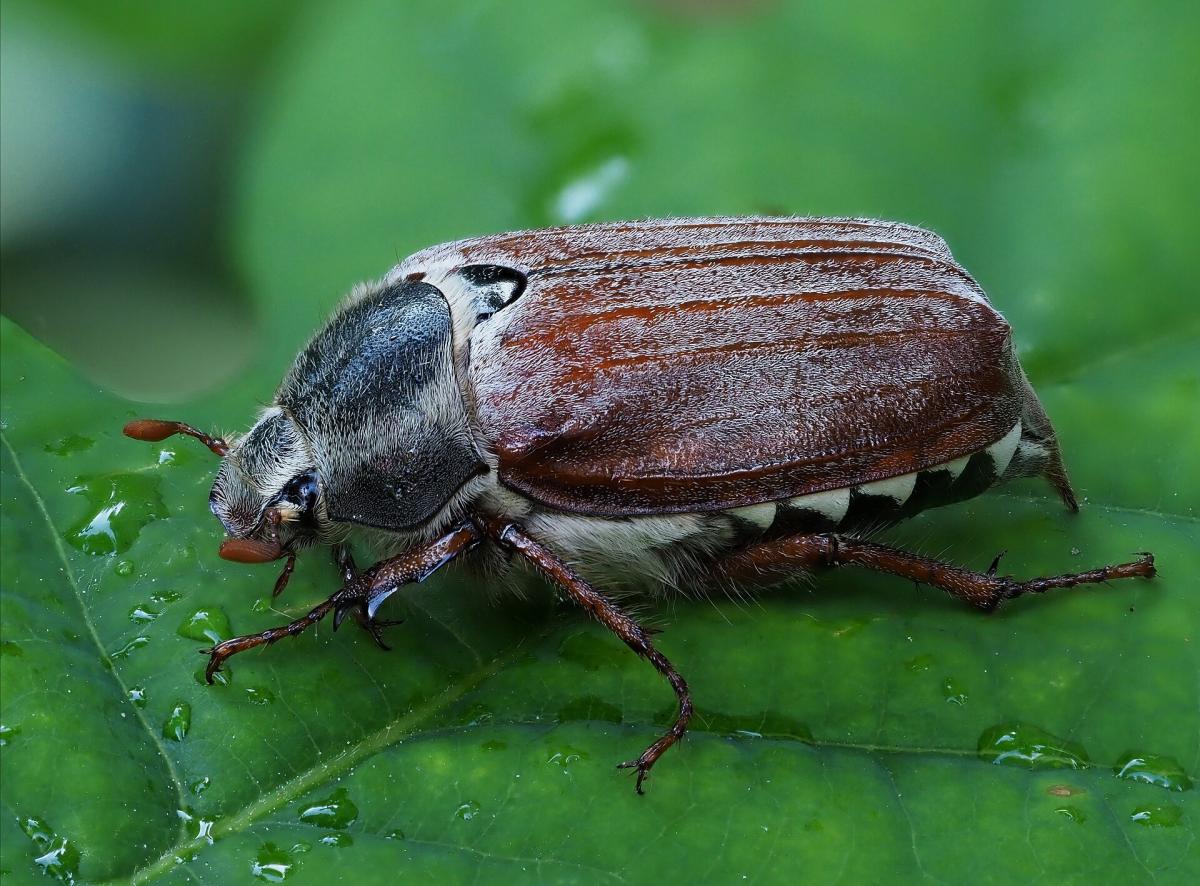
The 'maybug' that blunders into a lit window on a warm May evening with a considerable thud.
A large, heavy brown beetle with a black thorax, whitish triangular markings along the sides of the abdomen and remarkable fanned, leaf-like antennae — much larger in males. Cockchafers appear suddenly in May and June around Dumfries, flying at dusk with a loud clumsy buzz and colliding with lit windows, which is how most people meet one.
Behaviour
The adult life is brief — a few weeks of flying, feeding on leaves and mating. The larva, a fat white C-shaped grub, spends three to five years underground eating roots, and historically caused serious damage to grassland and crops; in past centuries swarms were destructive enough to be recorded in parish accounts. The fanned antennae are scent organs, used by males to find females.
When to see it
Quick facts
- Family
- Scarab beetles (Scarabaeidae)
- Size
- 25–30 mm
- Status
- Native; common, with numbers recovering since pesticide restrictions
Photo by Frank Vassen from Brussels, Belgium, CC BY 2.0, via Wikimedia Commons