Comma
Polygonia c-album
Print fact sheet (PDF)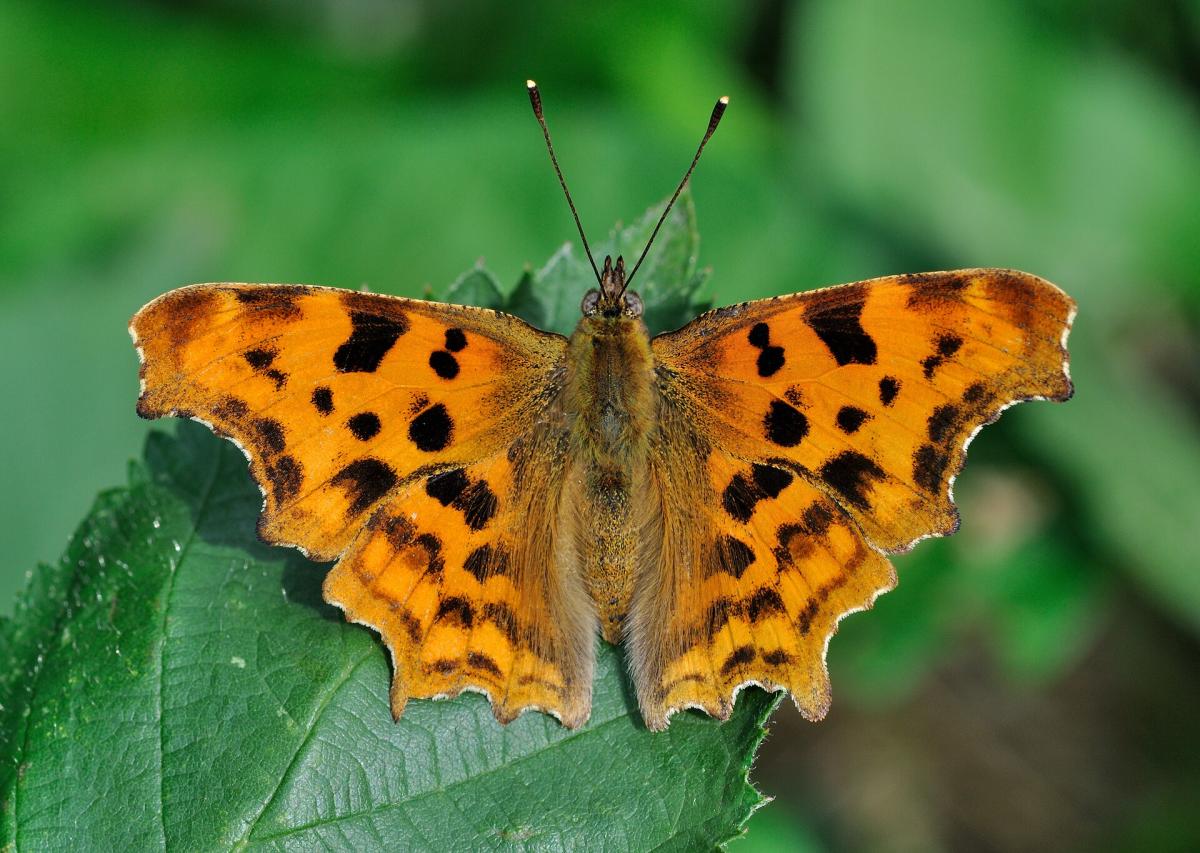
Ragged-edged and named for a single white mark under the wing, shaped exactly like a comma.
A tawny-orange butterfly whose wing edges are so deeply scalloped and ragged that a closed-winged individual is a convincing dead leaf. The name comes from the small white comma-shaped mark on the dark underside of the hindwing. Commas have spread north dramatically in recent decades and are now a regular sight in Dumfries gardens, woodland edge and hedgerow.
Behaviour
Commas hibernate as adults, often hanging openly on a twig or in a log pile where the leaf mimicry keeps them safe. They have two forms: pale, bright individuals emerging in midsummer that breed straight away, and darker ones that go into hibernation instead. Caterpillars feed on nettle and hop, and resemble a bird dropping — white on black — for their last stage.
When to see it
Quick facts
- Family
- Brush-footed butterflies (Nymphalidae)
- Wingspan
- 5–6 cm
- Status
- Native; expanding north strongly
Photo by Quartl, CC BY-SA 3.0, via Wikimedia Commons