Common Blue
Polyommatus icarus
Print fact sheet (PDF)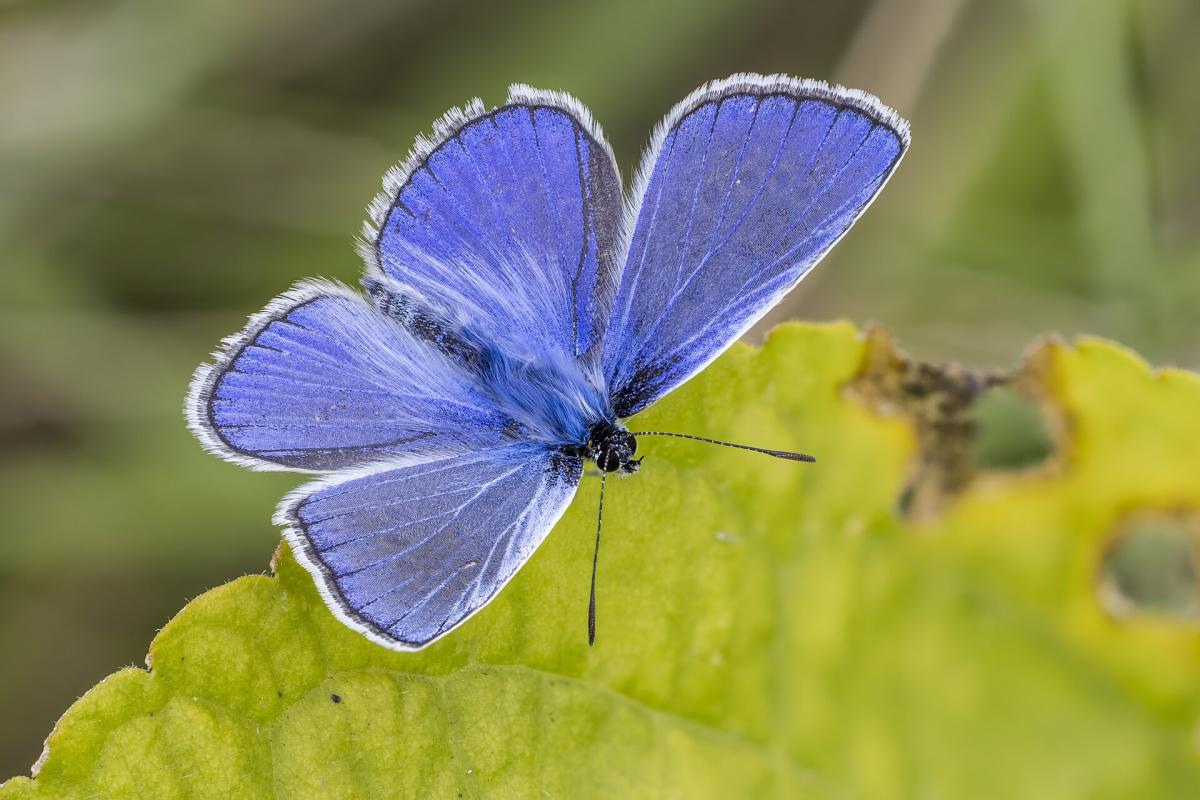
The male is violet-blue; the female is mostly brown, which catches almost everybody out.
Our commonest blue butterfly. Males are a bright violet-blue above with a fine white fringe; females are brown, usually with a dusting of blue at the wing bases and a row of orange crescents along the margins, and are frequently mistaken for a different species. Both sexes share a grey-brown underside spotted with black and orange. Found on unimproved grassland, verges and dunes around Dumfries.
Behaviour
Common blues depend entirely on bird's-foot trefoil and related vetches, so they disappear from over-fertilised or heavily grazed grassland. Adults roost communally, several individuals settling head-down on the same grass stem overnight. The caterpillars secrete a sugary fluid and are attended and protected by ants, a relationship shared with many of the blues.
When to see it
Quick facts
- Family
- Blues and coppers (Lycaenidae)
- Wingspan
- 3–3.5 cm
- Status
- Native; widespread on unimproved grassland
Photo by Charles J. Sharp, CC BY-SA 4.0, via Wikimedia Commons