Common Wasp
Vespula vulgaris
Print fact sheet (PDF)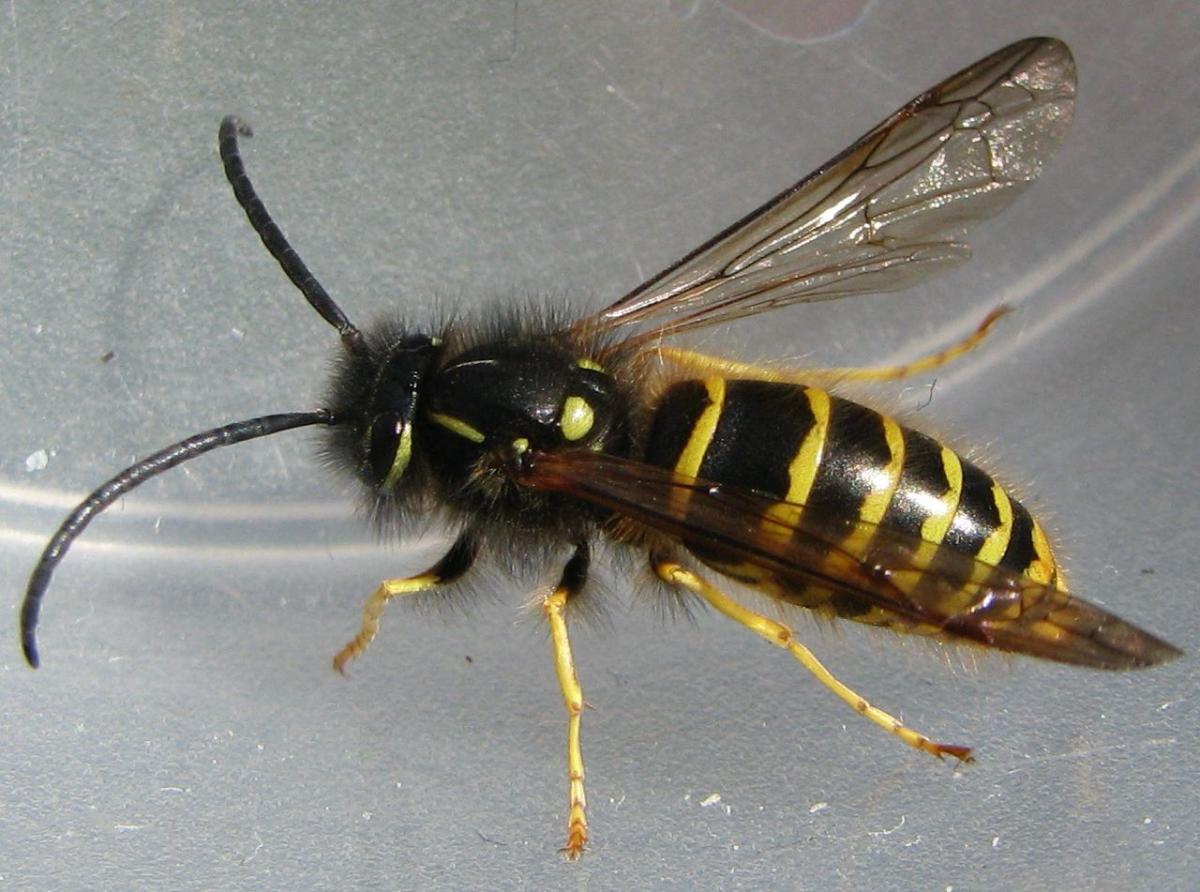
Spends the summer as a useful predator of garden pests, then turns up at your picnic in September.
The familiar black-and-yellow social wasp, with an anchor-shaped black mark on the face distinguishing it from the very similar German wasp. Common wasps build a papery nest in a cavity — a loft, a bank, a wall, a shed — around Dumfries. A large nest may hold several thousand workers by late summer, and the whole colony dies off at the end of the season.
Behaviour
For most of the summer wasps are predators, catching enormous numbers of caterpillars, aphids and flies to feed their larvae, which makes them genuinely useful in a garden. In late summer the queen stops laying, the workers are no longer needed for provisioning and switch to seeking sugar — which is when they become a nuisance. Only mated queens survive the winter, in hibernation.
When to see it
Quick facts
- Family
- Social wasps (Vespidae)
- Size
- Workers 12–17 mm
Photo by Magne Flåten, CC BY-SA 3.0, via Wikimedia Commons