Devil's Coach Horse
Ocypus olens
Print fact sheet (PDF)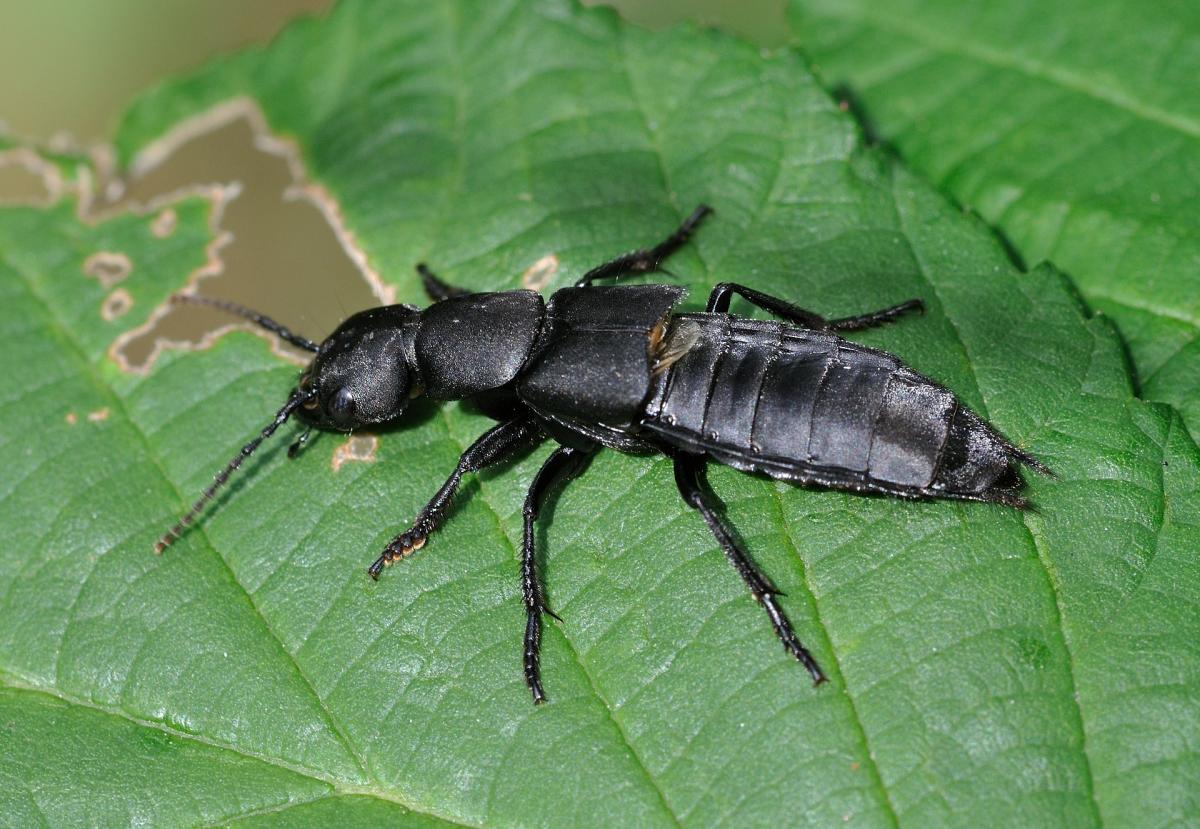
Curls its tail up like a scorpion when cornered — all bluff, but convincing bluff.
A long, narrow, matt-black beetle with very short wing cases that leave most of the flexible abdomen exposed, giving it an earwig-like look. Devil's coach horses are common under stones, logs and leaf litter in gardens, hedgerows and woodland around Dumfries, and are usually found by turning something over or meeting one crossing a path after dark.
Behaviour
Threatened, it raises its abdomen vertically over its back in a scorpion posture, opens its jaws and releases a foul smell from glands at the tail — the olens of its name means 'smelling'. It has no sting, but it can and will bite. It hunts at night, taking slugs, worms and other invertebrates with powerful jaws, which makes it a useful garden ally. Folklore long associated it with the devil.
When to see it
Quick facts
- Family
- Rove beetles (Staphylinidae)
- Size
- 20–32 mm
- Status
- Native; common and widespread
Photo by Quartl, CC BY-SA 3.0, via Wikimedia Commons