Drone Fly
Eristalis tenax
Print fact sheet (PDF)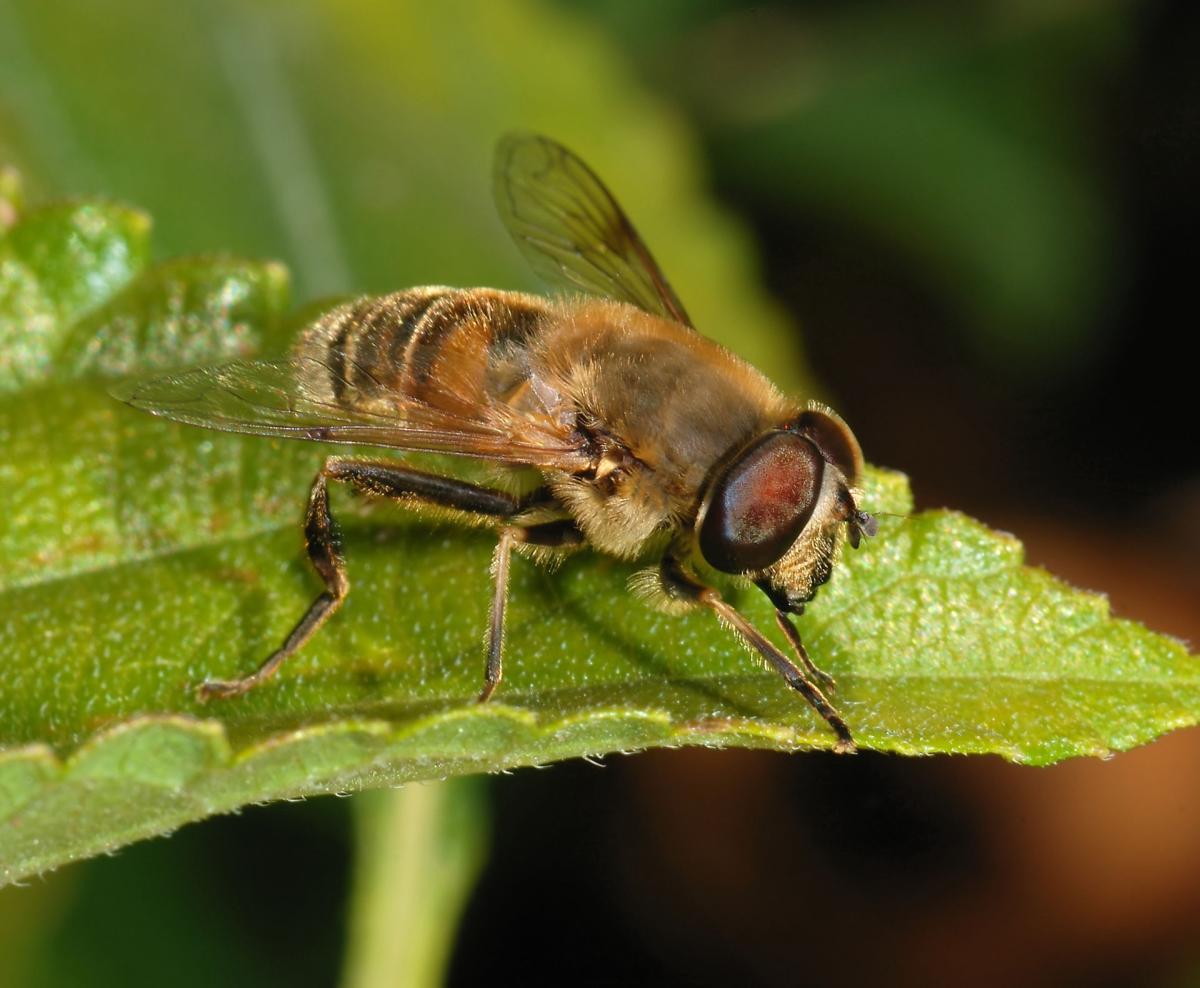
A honey bee lookalike whose larva breathes through a snorkel in liquid filth.
A stout, brown-and-tan hoverfly that closely resembles a male honey bee — the drone of its name — with large eyes and a broad body. Drone flies are abundant in gardens, farmland and waste ground around Dumfries, and are among the very few flying insects that can be found on a sunny day in the middle of winter, having overwintered as adults.
Behaviour
The bee mimicry is convincing enough to fool most people and, presumably, most birds. The larva is the extraordinary part: known as a rat-tailed maggot, it lives in stagnant, oxygen-free liquid — wet manure, silage seepage, blocked gutters — and breathes through a long retractable telescopic tail extended to the surface. Adults are important late- and early-season pollinators.
When to see it
Quick facts
- Family
- Hoverflies (Syrphidae)
- Size
- 12–15 mm
- Status
- Native; abundant and widespread
Photo by Alvesgaspar, CC BY-SA 3.0, via Wikimedia Commons