Great Diving Beetle
Dytiscus marginalis
Print fact sheet (PDF)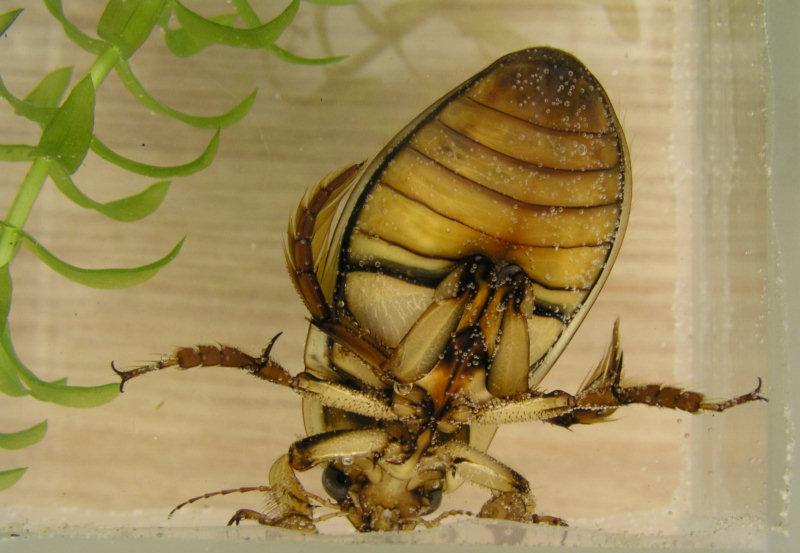
Carries its own air supply under its wing cases, and will take on a newt or a small fish.
A large, streamlined, dark olive-brown water beetle with a distinct golden-yellow margin around the thorax and wing cases. Males have smooth, glossy wing cases and suction pads on their front legs; females' are usually grooved. Great diving beetles live in well-vegetated ponds, ditches and lochans around Dumfries and are among the largest invertebrate predators in fresh water here.
Behaviour
It surfaces tail-first to renew a bubble of air held under the wing cases, which works as both an air supply and a physical gill. Adults and the fierce, long-jawed larvae — 'water tigers' — take tadpoles, insect larvae, newts and even small fish. Adults fly strongly at night between waters, navigating by reflected light, which is how new garden ponds are colonised so quickly.
When to see it
Quick facts
- Family
- Predaceous diving beetles (Dytiscidae)
- Size
- 27–35 mm
- Status
- Native; widespread in well-vegetated still water
Public domain, via Wikimedia Commons