Green Drake Mayfly
Ephemera danica
Print fact sheet (PDF)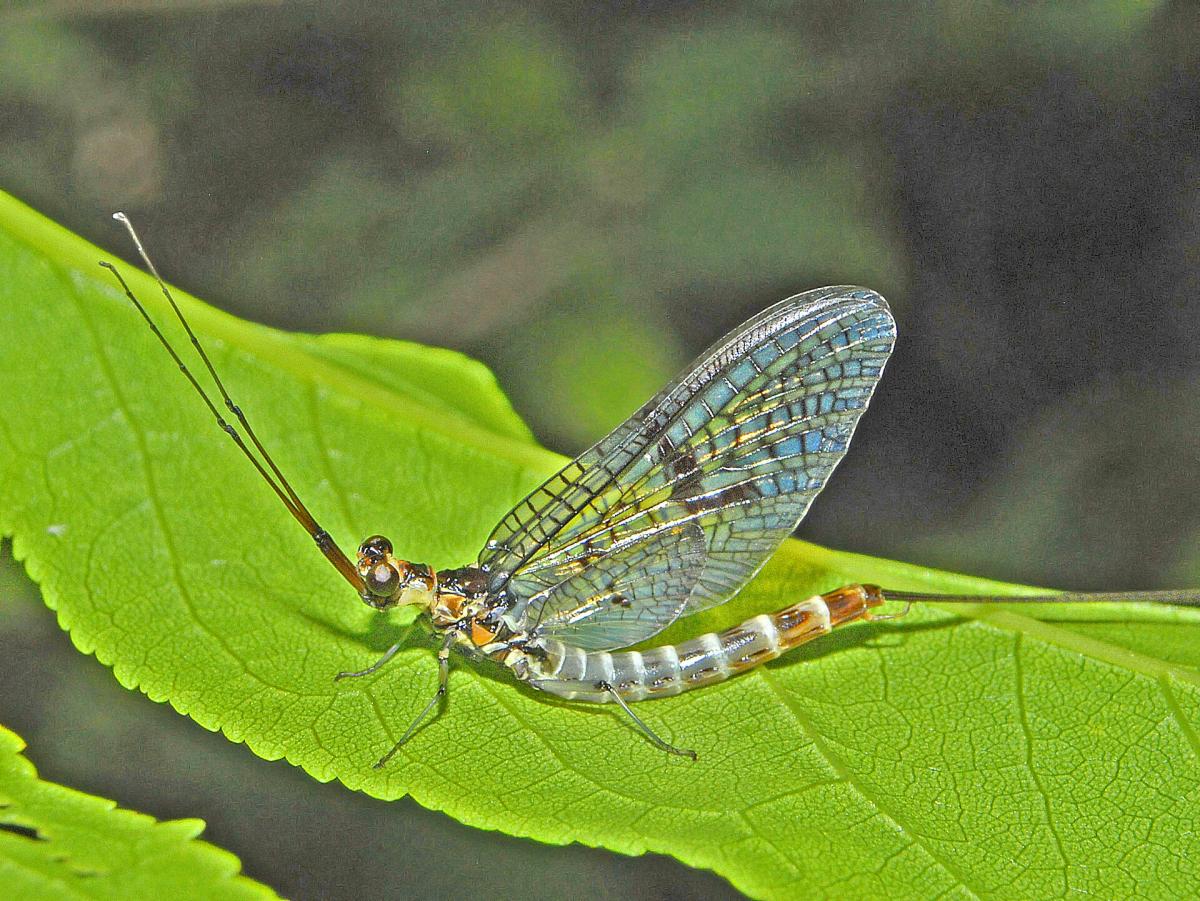
Two years in the riverbed, then a single day in the air — the mayfly proper.
Our largest mayfly: a pale cream-yellow insect with dark-blotched, heavily veined wings held upright like sails, and two or three long tail filaments. Green drakes emerge from clean, gravelly rivers such as the Nith and its tributaries in late spring, and the mass emergence is one of the defining events of the fishing year.
Behaviour
The nymph burrows in silt and fine gravel for around two years. Emergence is remarkable: the insect rises to the surface, sheds its skin into a dull-winged sub-adult, then — uniquely among insects — moults a second time into the glossy adult. Adults have no functional mouthparts and cannot feed; they live a day or so, dance in swarms over the water, mate, lay and die.
When to see it
Quick facts
- Family
- Burrowing mayflies (Ephemeridae)
- Size
- Body 15–25 mm · our largest mayfly
- Status
- Native; an indicator of clean, gravelly rivers
Photo by Hectonichus, CC BY-SA 3.0, via Wikimedia Commons