Harlequin Ladybird
Harmonia axyridis
Print fact sheet (PDF)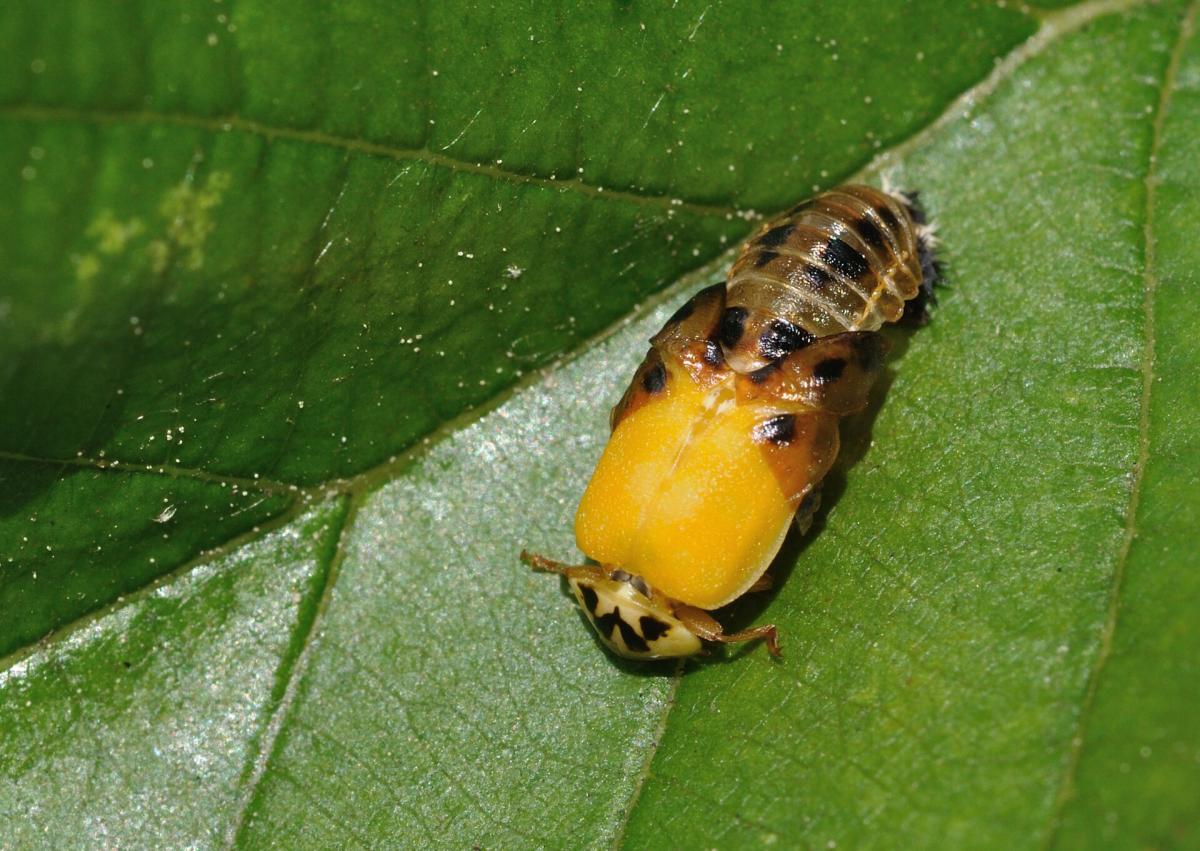
Arrived in Britain in 2004 and is now the fastest-spreading invasive insect on record here.
A large, variable ladybird — orange with up to twenty-one black spots, or black with two or four red spots, and many patterns in between — which makes it hard to pin down. Useful clues are the size, the brown rather than black legs, and a white pronotum marked with a black M or W. Harlequins reached Britain in 2004 and are now common in Dumfries gardens.
Behaviour
Harlequins are aphid predators like our native ladybirds, but larger, hungrier and less fussy: when aphids run short they eat other ladybirds' eggs and larvae, including seven-spots and the two-spot, and several native species have declined markedly since their arrival. They gather in large numbers to hibernate inside buildings, which is when most people first notice them.
When to see it
Quick facts
- Family
- Ladybirds (Coccinellidae)
- Size
- 6–8 mm · larger than most native ladybirds
- Status
- Invasive non-native; arrived in Britain in 2004
Photo by Quartl, CC BY-SA 3.0, via Wikimedia Commons