Honey Bee
Apis mellifera
Print fact sheet (PDF)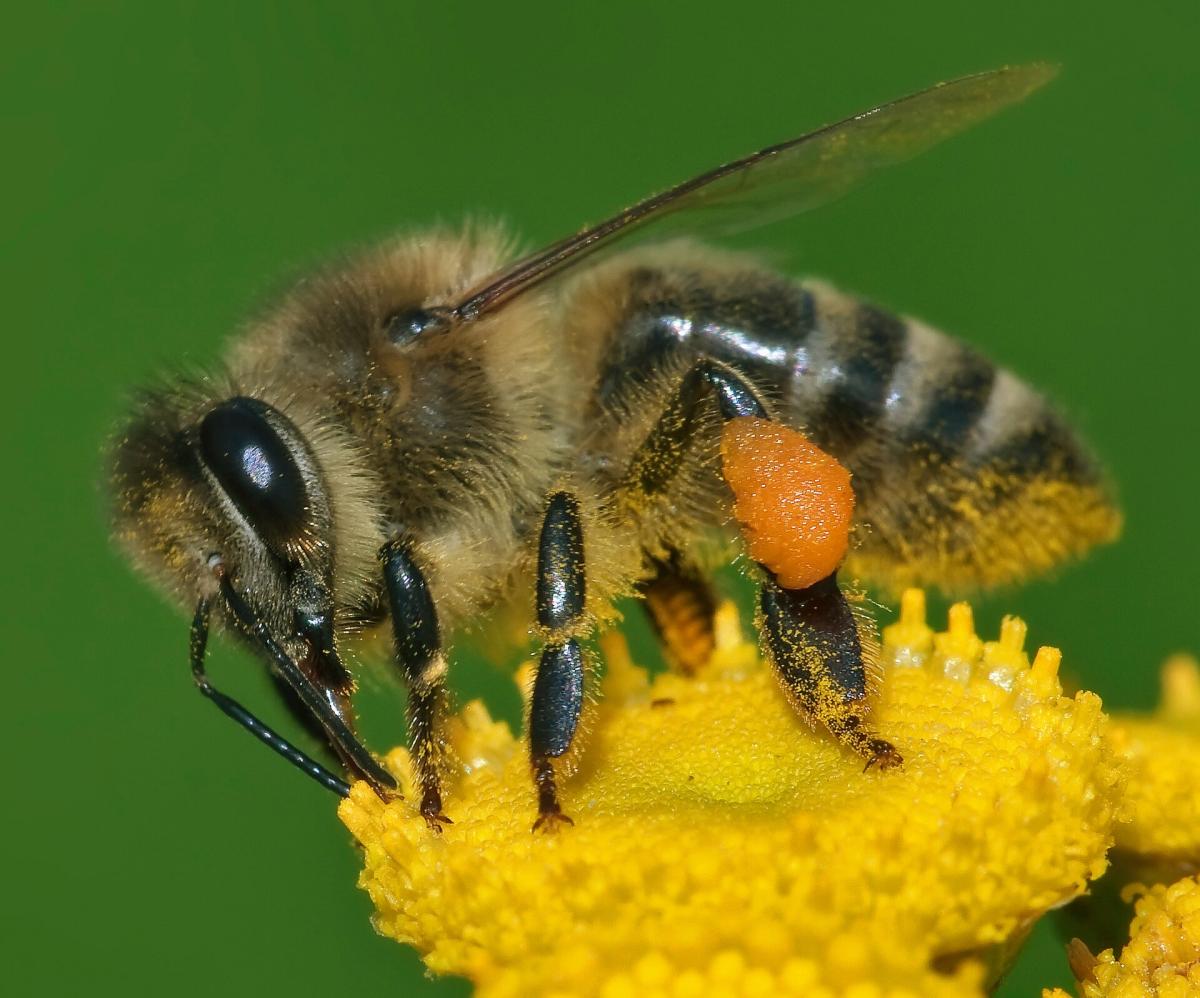
The only bee here whose whole colony overwinters — by shivering to keep the hive warm.
A slim, golden-brown to dark banded bee, smaller and much less furry than a bumblebee, with a narrow waist and translucent wings. Almost all honey bees around Dumfries belong to managed hives, though swarms occasionally establish in tree cavities and buildings. They forage widely across gardens, farmland and moorland, sometimes miles from the hive.
Behaviour
Honey bees are unique here in maintaining a colony of thousands right through the winter, clustering and shivering their flight muscles to hold the core of the hive near 35°C, living on stored honey. Foragers communicate the direction and distance of a food source to nestmates with the waggle dance — one of the few known symbolic communication systems outside vertebrates.
When to see it
Quick facts
- Family
- Bees (Apidae)
- Size
- Workers 12–15 mm
- Status
- Largely managed; wild colonies are scarce
Photo by Andreas Trepte, CC BY-SA 2.5, via Wikimedia Commons