Marmalade Hoverfly
Episyrphus balteatus
Print fact sheet (PDF)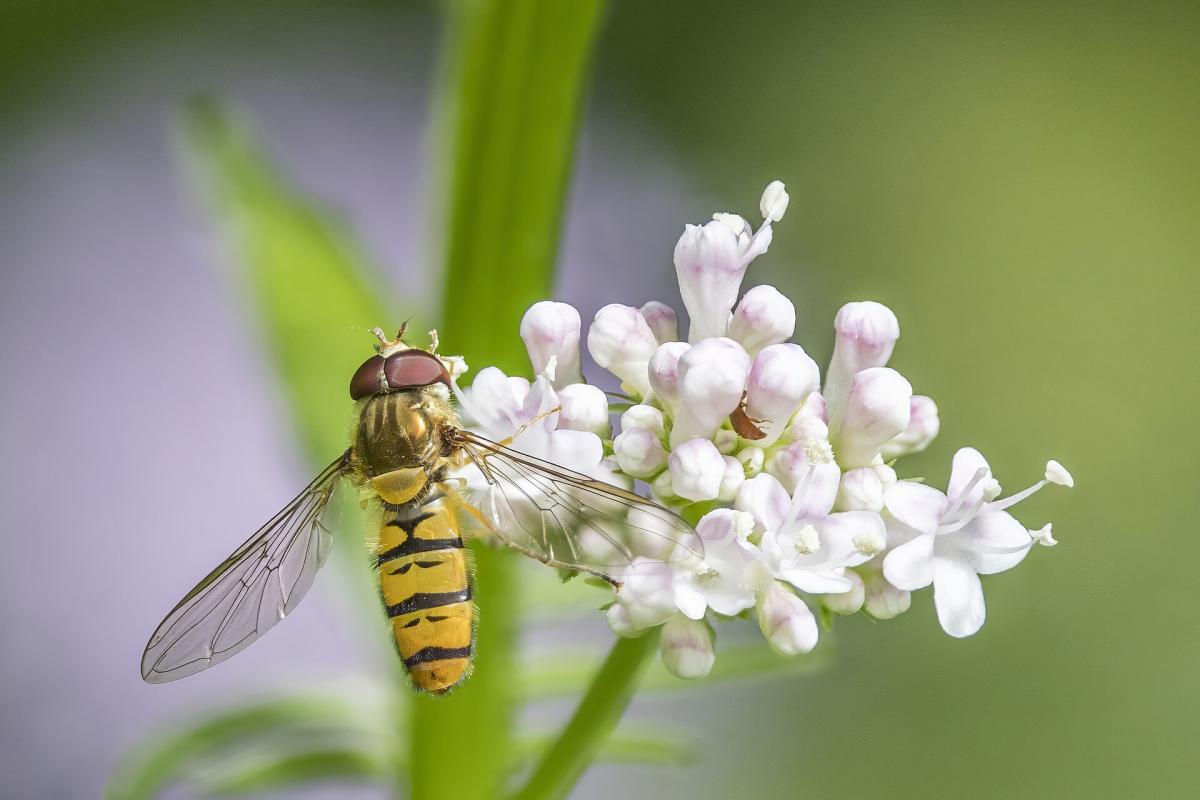
Double black bands on orange, no sting whatsoever, and its larvae eat aphids by the hundred.
A small, slender hoverfly, orange with a distinctive pattern of paired black bands on each abdominal segment — one thick, one thin — which no other common hoverfly shares. Marmalade hoverflies are abundant in gardens, verges and farmland around Dumfries, and are among the first and last flying insects of the year. Like all hoverflies they have two wings, not four, and cannot sting.
Behaviour
The black-and-orange banding is Batesian mimicry — it borrows the warning colours of wasps without any of the weaponry. Adults hover precisely, hold station in mid-air and visit a huge range of open flowers, making them important pollinators. The larvae are voracious aphid predators, each eating hundreds during development, which makes the species valuable in gardens and crops.
Migration
Resident numbers are boosted every summer by very large migrations from continental Europe, and in some years marmalade hoverflies arrive in enormous quantities.
When to see it
Quick facts
- Family
- Hoverflies (Syrphidae)
- Size
- 9–12 mm
- Status
- Native, plus large migrations; abundant
Photo by Charles J. Sharp, CC BY-SA 4.0, via Wikimedia Commons