Red Mason Bee
Osmia bicornis
Print fact sheet (PDF)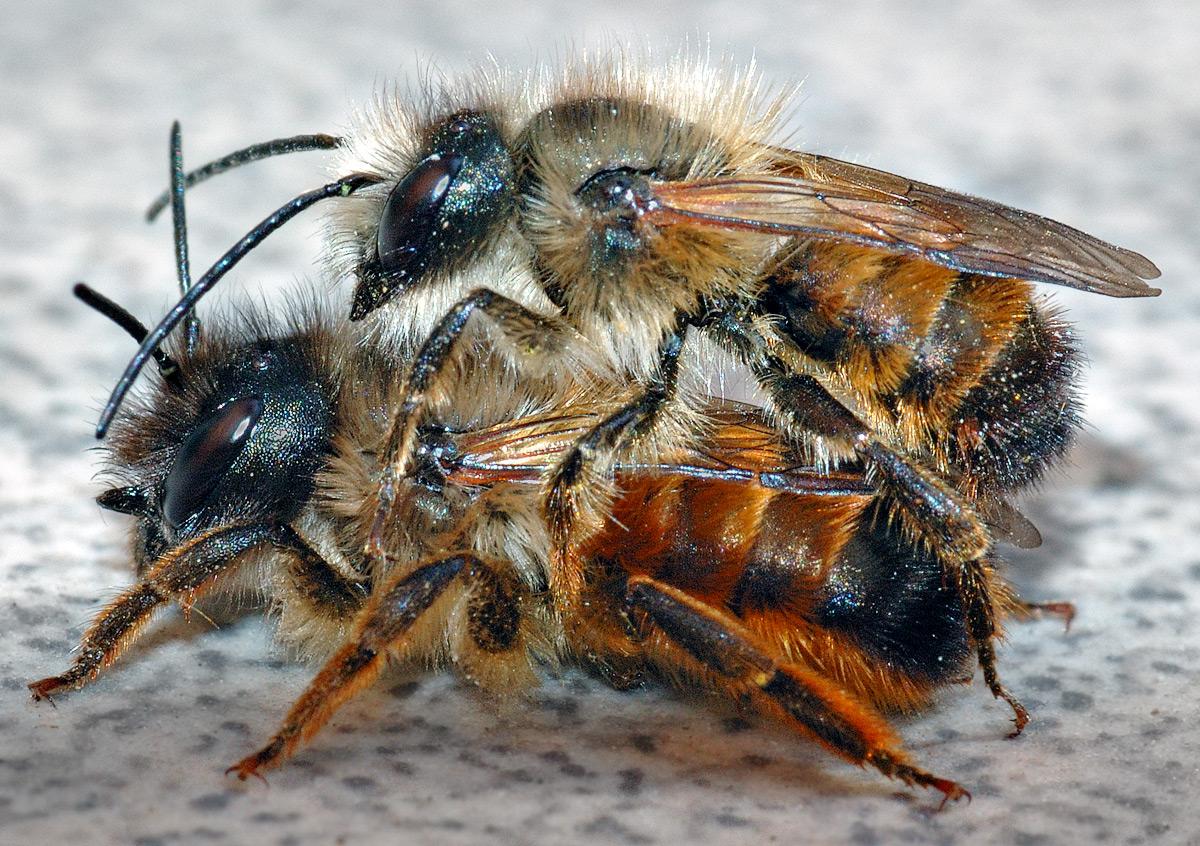
The bee that fills your bee hotel, one mud-walled cell at a time.
A stocky solitary bee covered in gingery-red hair, with a black head; females have two small horns on the face, which give the species its scientific name. Red mason bees are common in gardens and around old walls and buildings in Dumfries, and are the species that most readily takes to shop-bought or home-made bee hotels.
Behaviour
Females nest in existing cavities — hollow stems, wall crevices, drilled blocks — and build a line of cells inside, each stocked with pollen and separated by a wall of mud, sealing the entrance with a mud plug. Females are laid at the back of the tube and males at the front, so the males emerge first. They are exceptionally efficient orchard pollinators, outperforming honey bees on apple.
When to see it
Quick facts
- Family
- Mason and leafcutter bees (Megachilidae)
- Size
- 10–13 mm
- Status
- Native; common, and a highly effective fruit pollinator
Photo by André Karwath aka Aka, CC BY-SA 2.5, via Wikimedia Commons