Signal Crayfish
Pacifastacus leniusculus
Print fact sheet (PDF)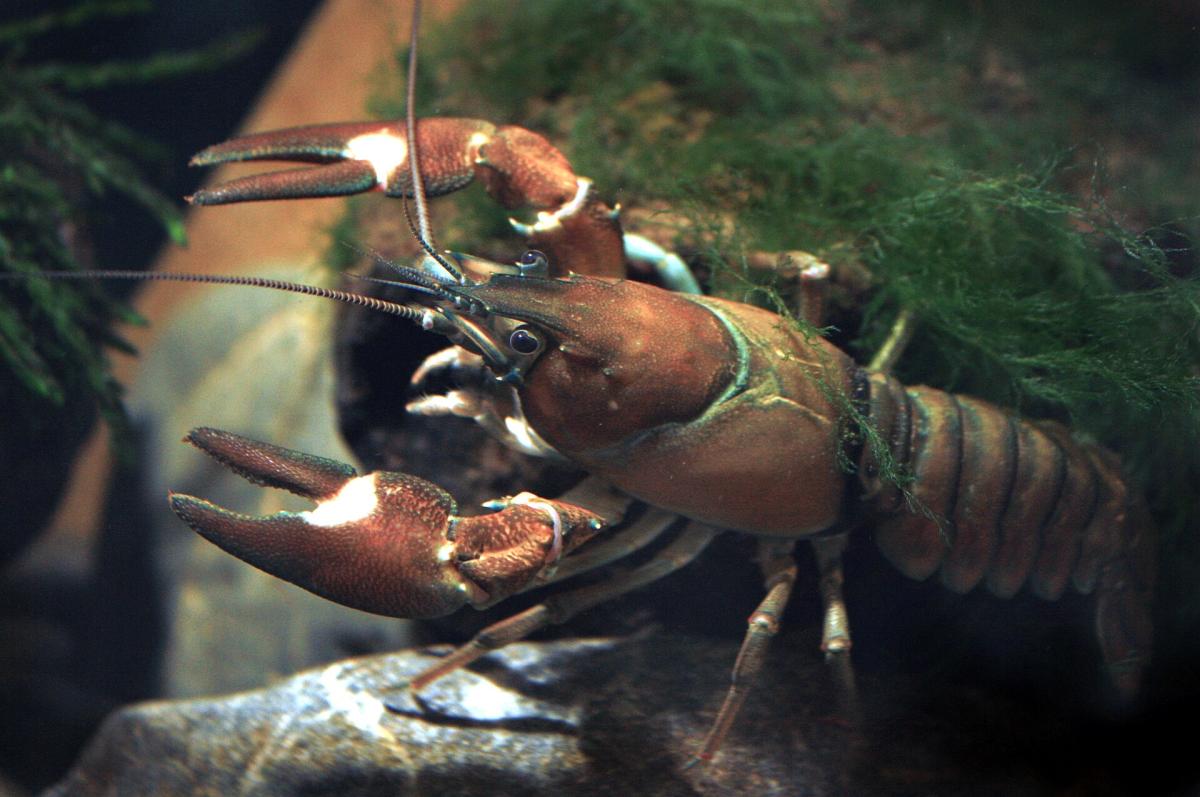
Introduced from North America, and it brought a plague that wiped out our own crayfish.
A large freshwater crustacean, greenish-brown with smooth claws that carry a distinctive white-turquoise patch at the hinge — the 'signal' that names it. Signal crayfish were introduced to Britain for farming in the 1970s, escaped, and have spread through river systems. They are an invasive species and it is an offence to release or move them.
Behaviour
Signals burrow extensively into riverbanks, causing collapse and heavy siltation, and eat almost anything — invertebrates, fish eggs, plants and each other. Most damagingly they carry crayfish plague, a fungal disease they tolerate but which is lethal to the native white-clawed crayfish, and which has driven that species towards extinction in Britain. Reporting sightings matters; moving them is illegal.
When to see it
Quick facts
- Family
- Freshwater crayfish (Astacidae)
- Size
- Up to 16–18 cm including claws
- Status
- Invasive non-native; illegal to release, and a carrier of crayfish plague
Photo by Astacoides, CC BY-SA 3.0, via Wikimedia Commons