Small Tortoiseshell
Aglais urticae
Print fact sheet (PDF)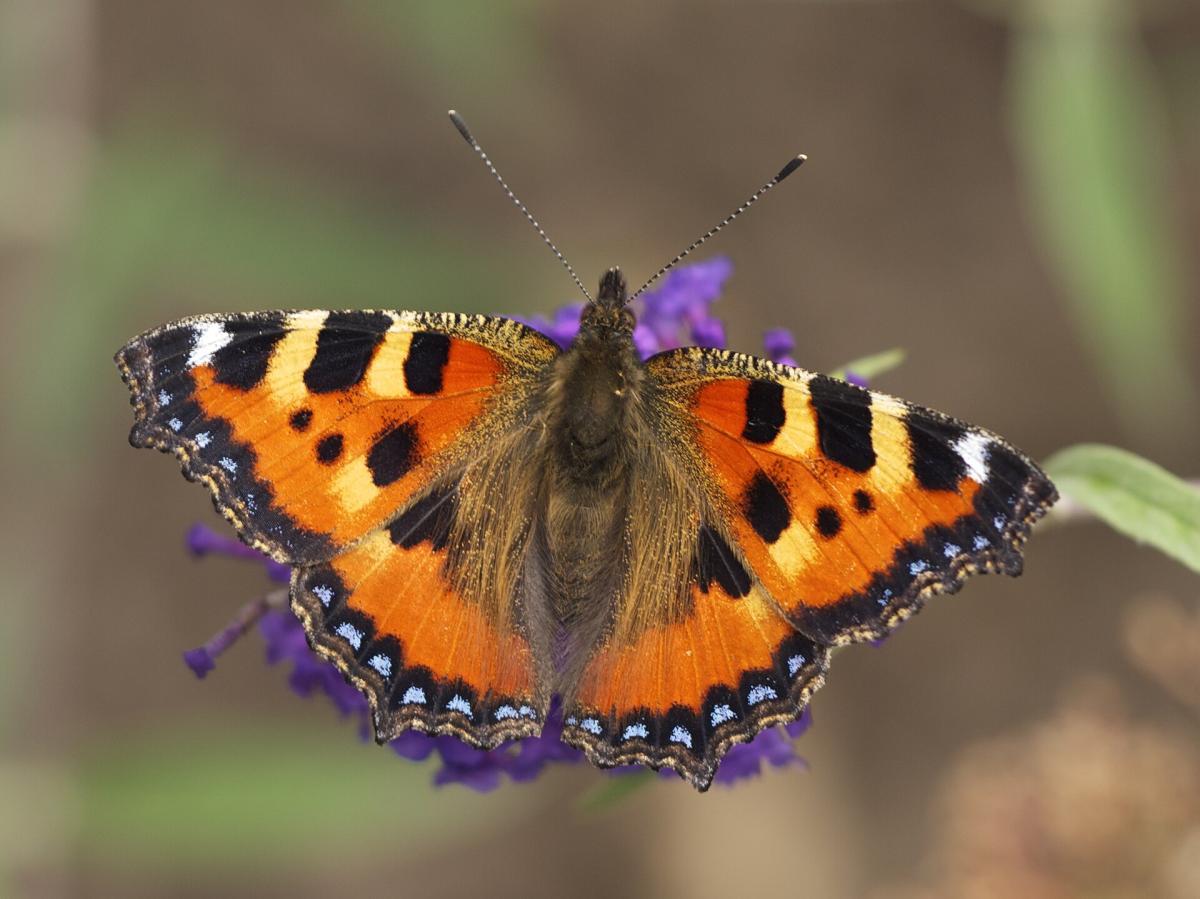
The butterfly that wakes up in your bedroom in February, having quietly overwintered in the curtains.
A vivid orange butterfly patterned with black and cream blocks along the leading edge and a border of blue crescents around the wing margins. The underside is dark and bark-like, making a resting adult almost invisible. Small tortoiseshells are common in gardens, verges and waste ground around Dumfries wherever nettles grow, and are among the first butterflies seen each spring.
Behaviour
Adults hibernate through the winter in sheds, lofts, porches and houses, which is why one occasionally appears indoors on a mild day months out of season. Eggs are laid in large batches on the tips of young nettles in sunny, sheltered spots, and the black-and-yellow spiny caterpillars feed together in a conspicuous silk web before dispersing to pupate.
When to see it
Quick facts
- Family
- Brush-footed butterflies (Nymphalidae)
- Wingspan
- 4.5–6 cm
- Status
- Native; common, though numbers fluctuate year to year
Photo by Jörg Hempel, CC BY-SA 3.0 de, via Wikimedia Commons