Wall Brown Butterfly
Lasiommata megera
Print fact sheet (PDF)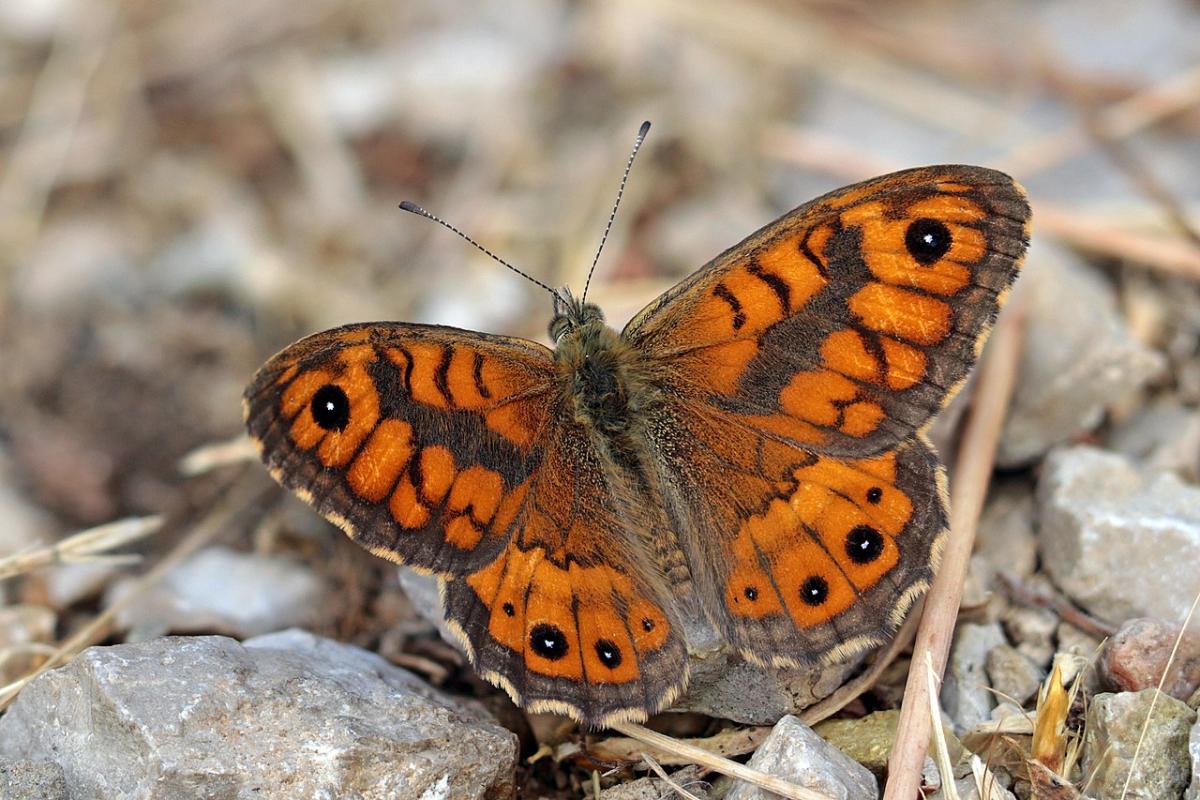
A sun-basking butterfly named for its favourite perch.
The wall brown gets its name from its habit of settling on bare walls, stony paths and sun-warmed ground, wings spread to soak up heat before darting off in a fast, low, zigzagging flight. It's a butterfly of open, sparsely vegetated places — coastal paths, quarries, dry banks and old walls — and in Dumfries & Galloway it's most reliable along the Solway coast, having become scarce or absent from much of inland Scotland. Two broods appear each year: a smaller spring generation on the wing through April, May and June, then a lull before a larger, more conspicuous second brood emerges in August and September. The orange-brown wings, patterned with dark eyespots ringed in white, are shown off in short, sunlit basking sessions between bursts of fast, low flight — a pattern that makes the wall brown one of the more energetic butterflies to watch on a warm coastal afternoon.
Behaviour
Males are strongly territorial, holding a favourite patch of bare ground or wall and darting out to intercept any passing butterfly, rival or potential mate alike. Between these sorties they bask side-on to the sun, wings held open to maximise heat gain. Eggs are laid on fine grasses in warm, sheltered spots, and caterpillars from the second brood overwinter half-grown, resuming feeding the following spring.
When to see it
Quick facts
- Family
- Browns (Nymphalidae, subfamily Satyrinae)
- Wingspan
- 4.5–5 cm
- Status
- Resident; scarce inland, strongest along the Solway coast
Photo by Charles J. Sharp, CC BY-SA 4.0, via Wikimedia Commons