White-tailed Bumblebee
Bombus lucorum
Print fact sheet (PDF)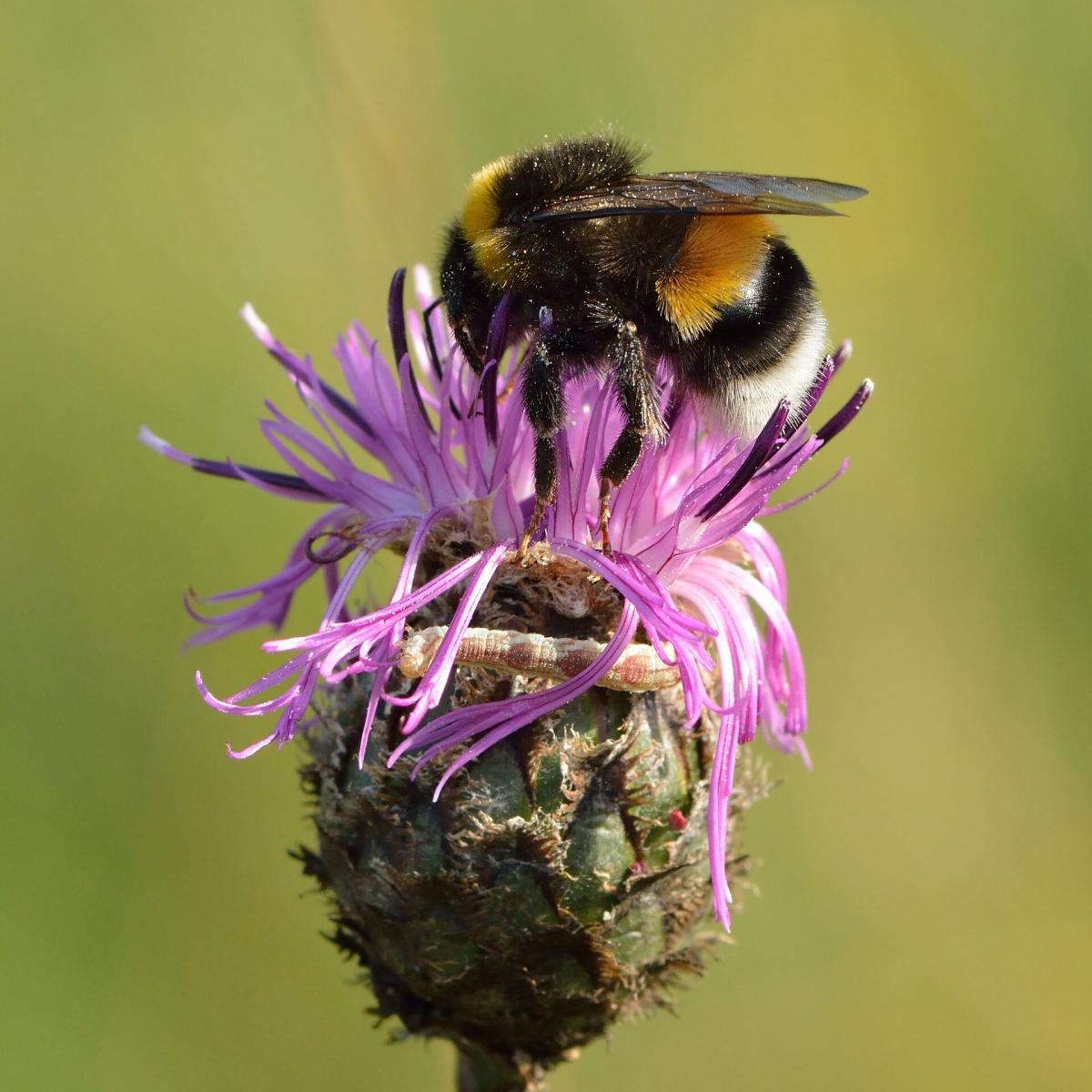
Brighter yellow bands and a clean white tail — but honestly, even experts need a microscope.
A common bumblebee with two lemon-yellow bands and a crisp white tail. It is very similar to the buff-tailed bumblebee, and the yellow is usually brighter and the tail cleaner white, but the distinction is genuinely difficult and reliable separation from its close relatives needs microscopic or genetic examination. White-tails are common in gardens and open country around Dumfries.
Behaviour
Like the buff-tail it is a short-tongued bee that favours open flowers and will rob nectar from long tubular ones. Nests are underground in banks, old burrows and cavities. What is called Bombus lucorum in Britain is now known to be a complex of at least three nearly identical species, so most records are logged as the 'white-tailed bumblebee aggregate' rather than one name.
When to see it
Quick facts
- Family
- Bees (Apidae)
- Size
- Queens 19–20 mm
- Status
- Native; abundant, and part of a near-identical species complex
Photo by Ivar Leidus, CC BY-SA 4.0, via Wikimedia Commons