American Mink
Neogale vison
Print fact sheet (PDF)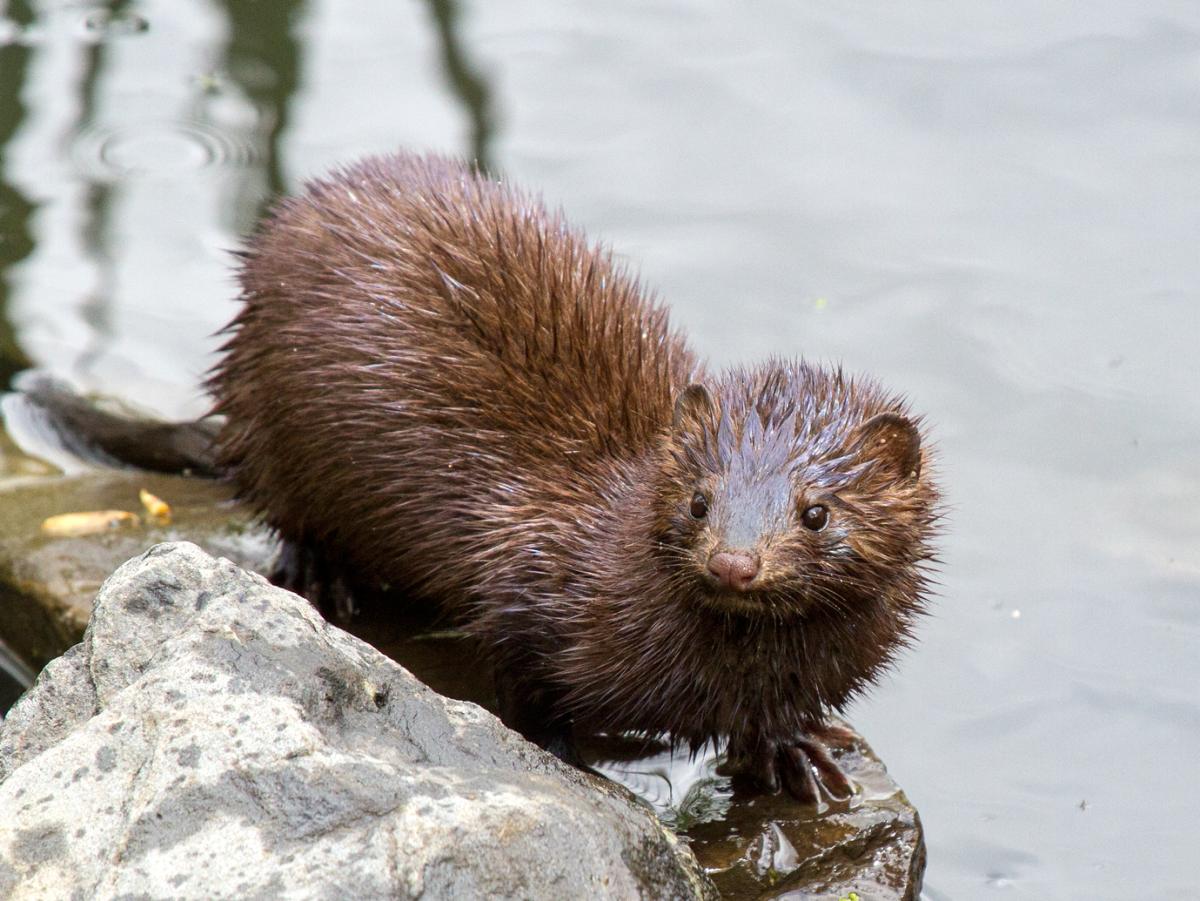
Escaped from fur farms, and the single biggest reason the water vole has all but gone.
A dark chocolate-brown to near-black semi-aquatic mustelid, slimmer than an otter and much smaller, usually with a small white patch on the chin or throat and a bushy tail. Mink were brought to Britain for fur farming from the 1920s and escaped or were released; they now live along the Nith and its tributaries and around the lochs of the region.
Behaviour
Mink hunt in water and on land, taking fish, water voles, rabbits, waterfowl and eggs. The damage they do to water voles is specific and severe: a female mink is slim enough to enter a water vole's burrow, so the vole's one defence — retreating underground — fails. Coordinated mink control along river catchments is now the main tool used to give water voles a chance of recovery.
When to see it
Quick facts
- Family
- Mustelids (Mustelidae)
- Size
- Body 30–45 cm plus a 15–25 cm tail
- UK status
- Invasive non-native; illegal to release, and subject to control
Photo by Needsmoreritalin, CC BY-SA 3.0, via Wikimedia Commons