Badger
Meles meles
Print fact sheet (PDF)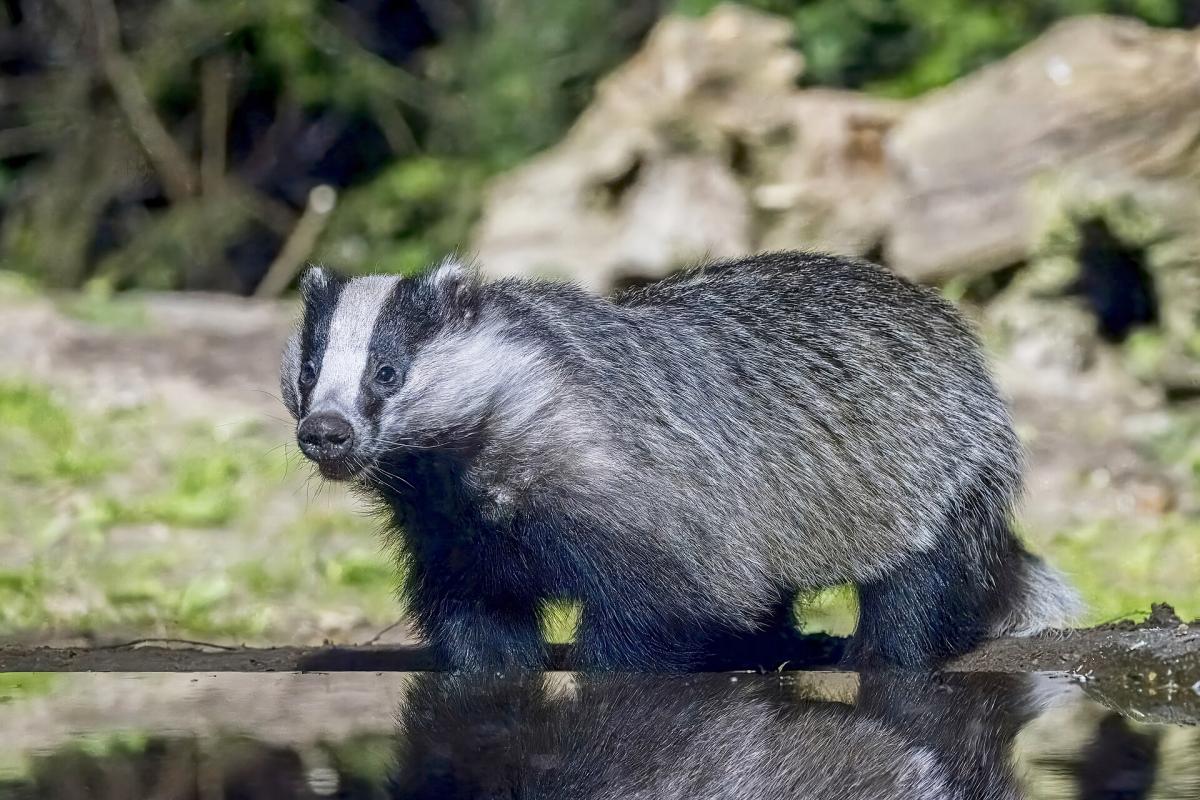
The striped face is famous; the sett beneath it may be centuries old and dug by generations.
A heavy, low-slung, powerfully built mustelid with a grizzled grey body, short legs and the unmistakable black-and-white striped face. Badgers live in social groups in setts — extensive tunnel systems dug into well-drained banks and woodland slopes — across the farmland and woodland around Dumfries. They are strictly nocturnal, so most evidence is the sett itself, well-worn paths, and snuffle holes in pasture.
Behaviour
Badgers are omnivores but earthworms are the staple, which is why they are most active on mild, damp nights and why pasture matters to them. They also take beetles, cereals, fruit and small mammals. A sett may be used continuously for generations, with each clan enlarging it, and they dig latrine pits at the territory boundary. They do not hibernate but become far less active in the coldest weeks.
When to see it
Quick facts
- Family
- Mustelids (Mustelidae)
- Size
- Body 60–90 cm · weighs 8–12 kg
- UK status
- Badgers and their setts are protected by law
Photo by Charles J. Sharp, CC BY-SA 4.0, via Wikimedia Commons