Brown Hare
Lepus europaeus
Print fact sheet (PDF)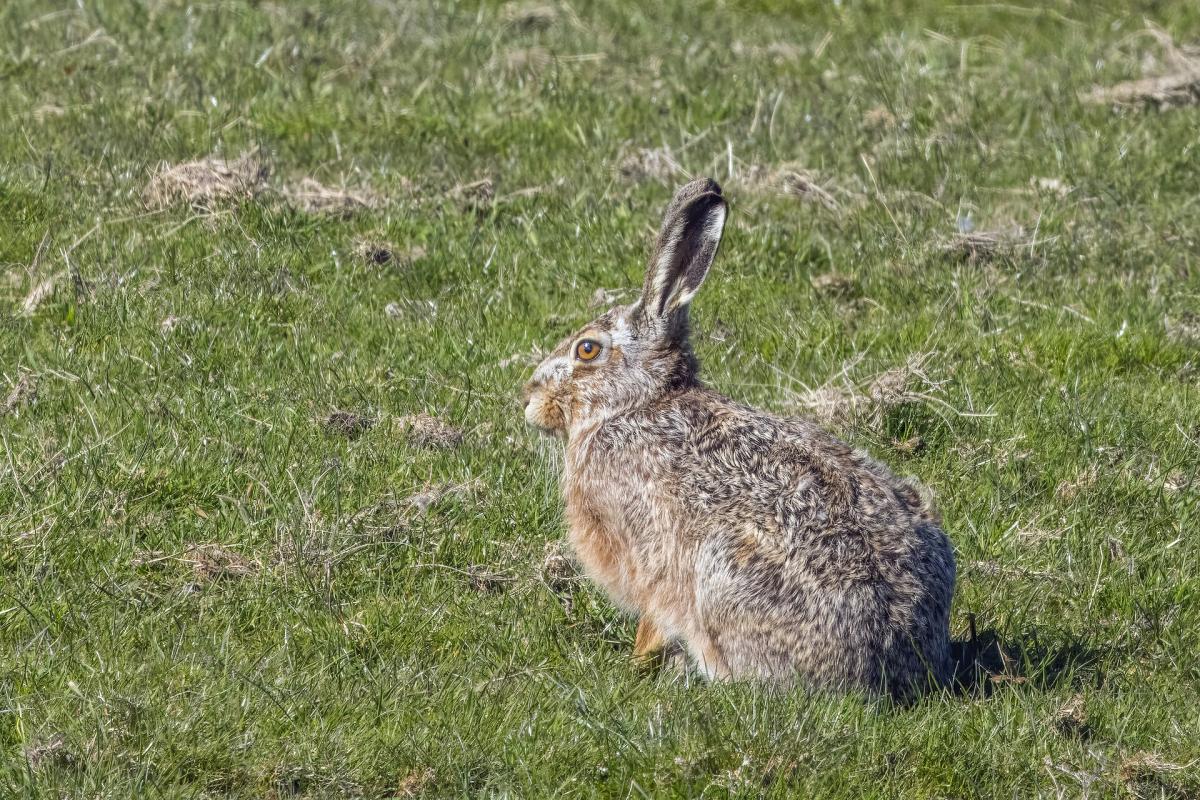
Long black-tipped ears, golden eyes and a flat-out sprint that no rabbit could manage.
Much larger and rangier than a rabbit, with very long black-tipped ears, powerful hind legs, a russet-gold coat and striking amber eyes. Brown hares live in open arable and grassland around Dumfries, above ground all year — they do not burrow. Instead they rest in a 'form', a shallow scrape in grass or a furrow, relying on stillness and camouflage until the last possible moment.
Behaviour
A hare's defence is speed: it can run at over 40 mph, and will lie flat and motionless until an intruder is a few metres away before exploding into a zig-zagging sprint. The famous 'boxing' of March hares is not two males fighting but a female fending off a male she is not ready to mate with. Leverets are born fully furred with their eyes open and are left alone in separate forms, visited briefly to suckle.
When to see it
Quick facts
- Family
- Rabbits and hares (Leporidae)
- Size
- Body 50–70 cm · can run at over 40 mph
- UK status
- A conservation priority species; declined markedly since the 1960s
Photo by Charles J. Sharp, CC BY-SA 4.0, via Wikimedia Commons