Brown Rat
Rattus norvegicus
Print fact sheet (PDF)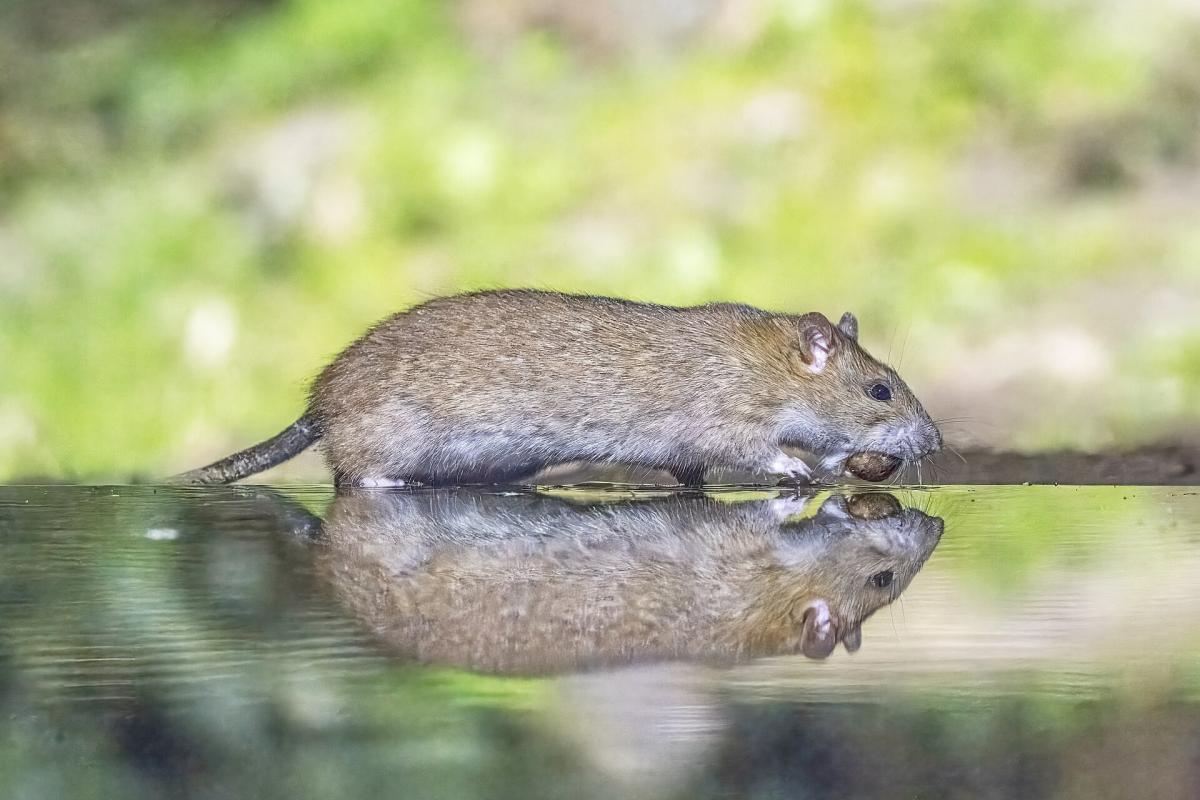
Introduced, adaptable and genuinely clever — and never as far from you as you think.
A large rodent with coarse grey-brown fur, a pointed face, prominent naked ears and a thick, scaly, sparsely haired tail shorter than its body. Brown rats reached Britain in the eighteenth century, probably from ships out of Russia, and are now everywhere people are — sewers, farmyards, riverbanks, compost heaps and bin stores across Dumfries. They are strong swimmers and often live along watercourses.
Behaviour
Rats are omnivorous, eating essentially anything, and are cautious about new food sources — sampling a small amount and waiting before committing, which is what makes them difficult to poison. They live in social groups in burrow systems, are mostly nocturnal where people are about, and are capable problem-solvers. They are the ancestors of laboratory and pet rats, and are the animal most often mistaken for a water vole.
When to see it
Quick facts
- Family
- Mice and rats (Muridae)
- Size
- Body 20–27 cm plus a 15–23 cm tail
- UK status
- Introduced; abundant and unprotected
Photo by Charles J. Sharp, CC BY-SA 4.0, via Wikimedia Commons