Common Shrew
Sorex araneus
Print fact sheet (PDF)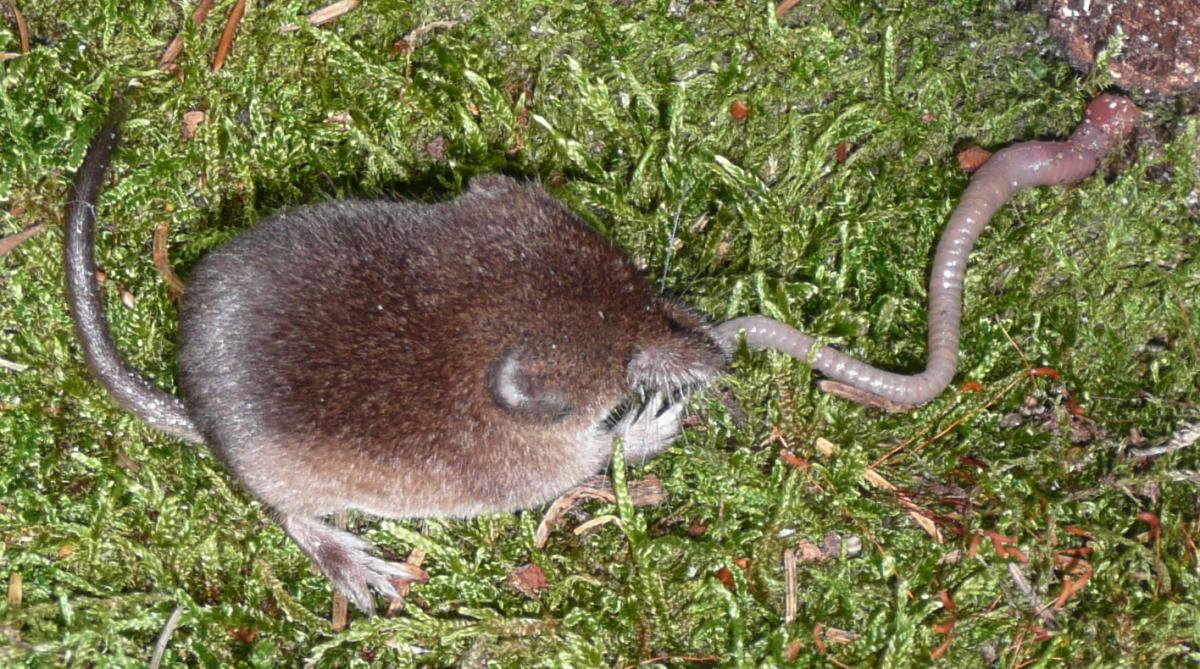
Must eat every few hours or die — a life lived at a pace nothing else here can match.
A tiny, dark, velvety mammal with a long, twitching, pointed snout, minute eyes and small ears buried in fur. Shrews are not rodents: the teeth are red-tipped and needle-like, for insects rather than seeds. Common shrews are abundant in the rough grassland, hedgerow bottoms and woodland leaf litter around Dumfries, though the usual way people encounter one is as a corpse left uneaten by a cat.
Behaviour
A shrew's metabolism is extraordinary — it must eat around its own body weight daily and cannot survive more than a few hours without food, so it is active in short bursts through both day and night, year-round. It hunts insects, worms and spiders in runs beneath the vegetation, using touch and smell. Shrews are fiercely territorial, and the high-pitched squabbling between two of them is often the only sign they are there.
When to see it
Quick facts
- Family
- Shrews (Soricidae)
- Size
- Body 5.5–8 cm plus a 2.5–4.5 cm tail
- UK status
- Protected from certain methods of killing; common and widespread
Photo by Soricida, CC BY-SA 3.0, via Wikimedia Commons