Daubenton's bat
Myotis daubentonii
Print fact sheet (PDF)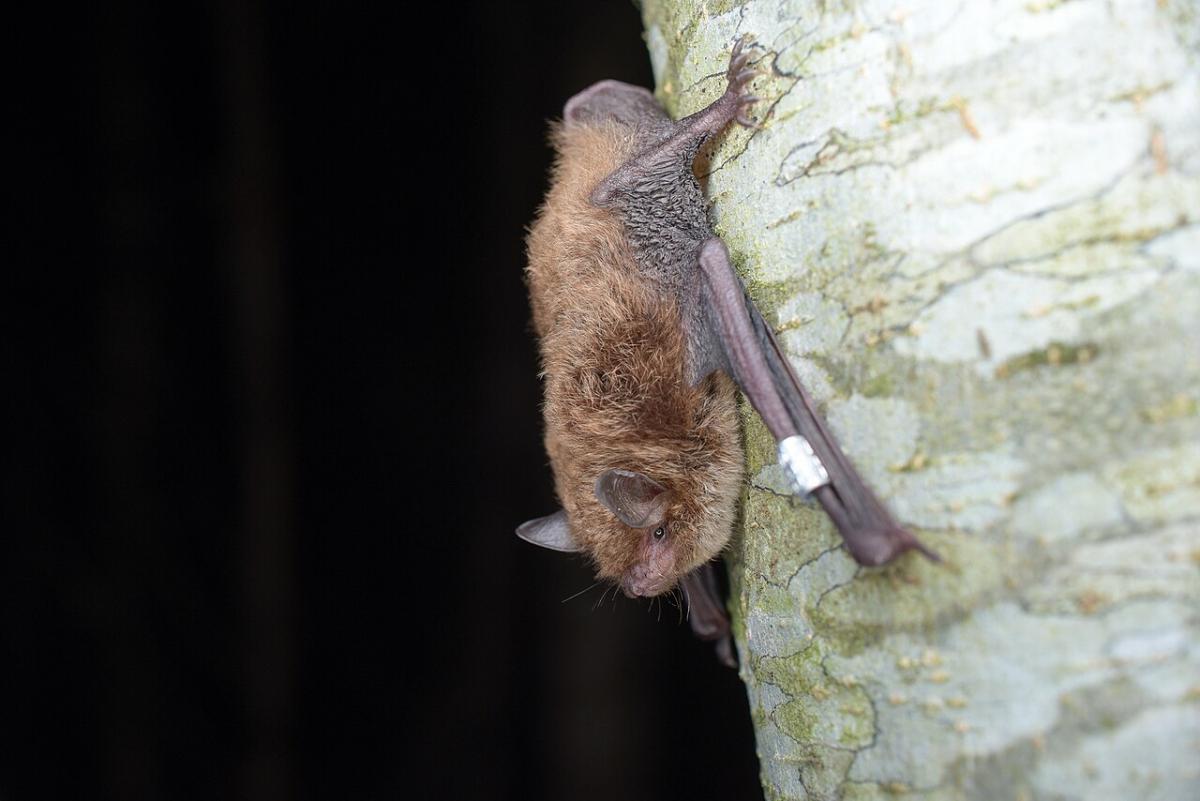
A low, fast flier that skims insects straight off the water's surface.
Daubenton's bat is a small, compact species built for hunting over water, and the River Nith, its ponds and canals are prime territory. It flies low and fast, often only a few centimetres above the surface, using its large feet and a wide tail membrane to trawl insects straight off the water. Roosts are typically found in bridges, tree holes and other structures close to water, sometimes only metres from where it feeds, and maternity colonies form in early summer before dispersing again in autumn. Like all British bats it is protected by law. Through the coldest months it hibernates in caves, tunnels, cellars and other cool, stable, humid sites, sometimes moving between several as conditions change. A bat detector tuned to around 45–50kHz picks up its clicking, machine-gun-like echolocation as it works a stretch of calm water.
Behaviour
Trawls low over still or slow-moving water, using its feet and tail membrane like a net to scoop up midges, caddisflies and other insects close to the surface — a technique that earns it the nickname 'water bat'. It's agile enough to drink on the wing, dipping down to the surface in flight. Roosts are usually close to its foraging water, often under bridges.
When to see it
Quick facts
- Family
- Vespertilionidae
- Size
- Wingspan 24–27cm, body 4.5–5.5cm
- UK status
- Protected under UK and European law
Photo by Rauno Kalda, CC BY-SA 4.0, via Wikimedia Commons