Field Vole
Microtus agrestis
Print fact sheet (PDF)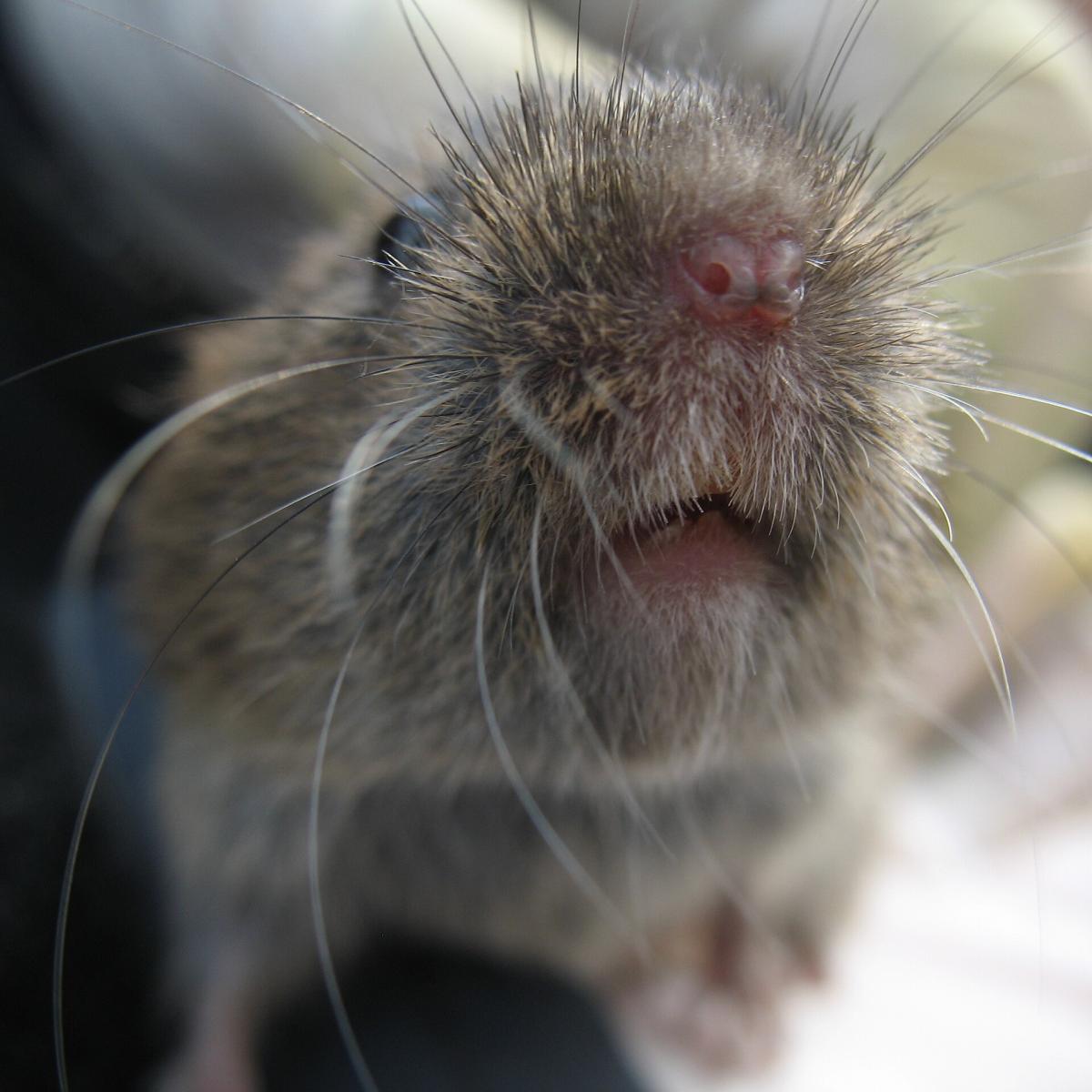
The animal that feeds half the region's predators — kestrels, owls, foxes and stoats all run on voles.
A small, shaggy, greyish-brown vole with a very short tail — under a third of its body length — a blunt nose and ears almost buried in fur. Field voles live in rough, tussocky grassland, young plantations, verges and set-aside across the Dumfries area, and are among the most numerous mammals in Britain. They are far more often detected by their runs and droppings than actually seen.
Behaviour
Field voles cut networks of narrow runways through the base of tussocky grass, leaving neat piles of chopped grass stems and small green droppings along them. They eat grass almost exclusively and are active around the clock in short bursts. Populations run on a boom-and-bust cycle of roughly three to five years, and the numbers of kestrels, barn owls and short-eared owls in a given year track that cycle closely.
When to see it
Quick facts
- Family
- Voles, lemmings and hamsters (Cricetidae)
- Size
- Body 8–13 cm plus a 2–4.5 cm tail
- UK status
- Abundant and widespread; not protected
Photo by Bruce McAdam, CC BY-SA 2.0, via Wikimedia Commons