House Mouse
Mus musculus
Print fact sheet (PDF)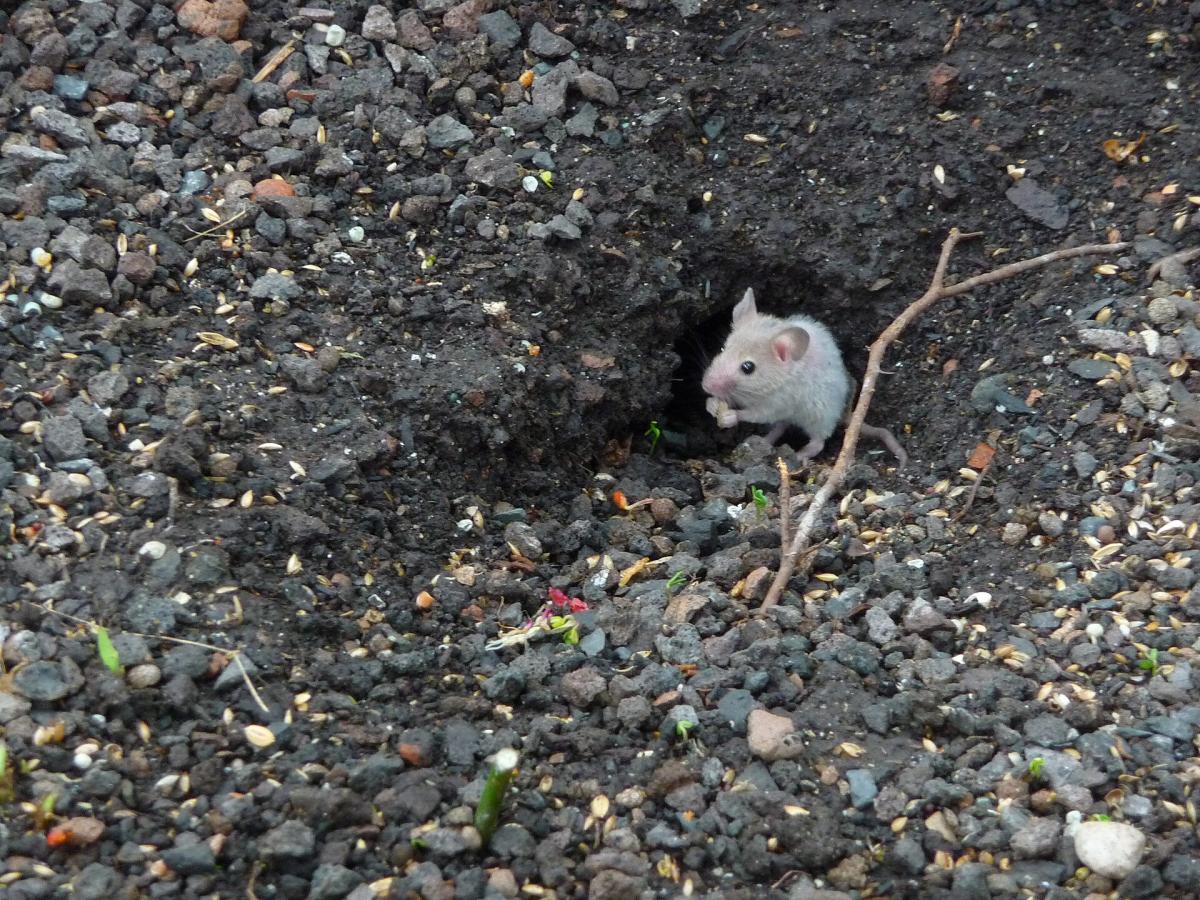
Greyer, smaller-eyed and mustier than a wood mouse — and it came here with the first farmers.
A small grey-brown mouse with a greyish rather than white belly, smaller eyes and ears than a wood mouse, and a scaly, almost hairless tail about as long as its body. House mice have lived alongside people in Britain for thousands of years, arriving with early agriculture, and around Dumfries they are found in buildings, farms and grain stores rather than out in the countryside.
Behaviour
House mice are nocturnal, highly social and thoroughly commensal — they can live entirely indoors, get most of their water from food, and breed year-round in a heated building. They are inquisitive about new objects, unlike rats, which is why traps work on them more readily. A strong musty smell, small dark droppings and gnawed packaging are usually the first evidence of them.
When to see it
Quick facts
- Family
- Mice and rats (Muridae)
- Size
- Body 7–10 cm plus a 7–10 cm tail
- UK status
- Long-established introduction; common and unprotected
Photo by 3268zauber, CC BY-SA 3.0, via Wikimedia Commons