Mole
Talpa europaea
Print fact sheet (PDF)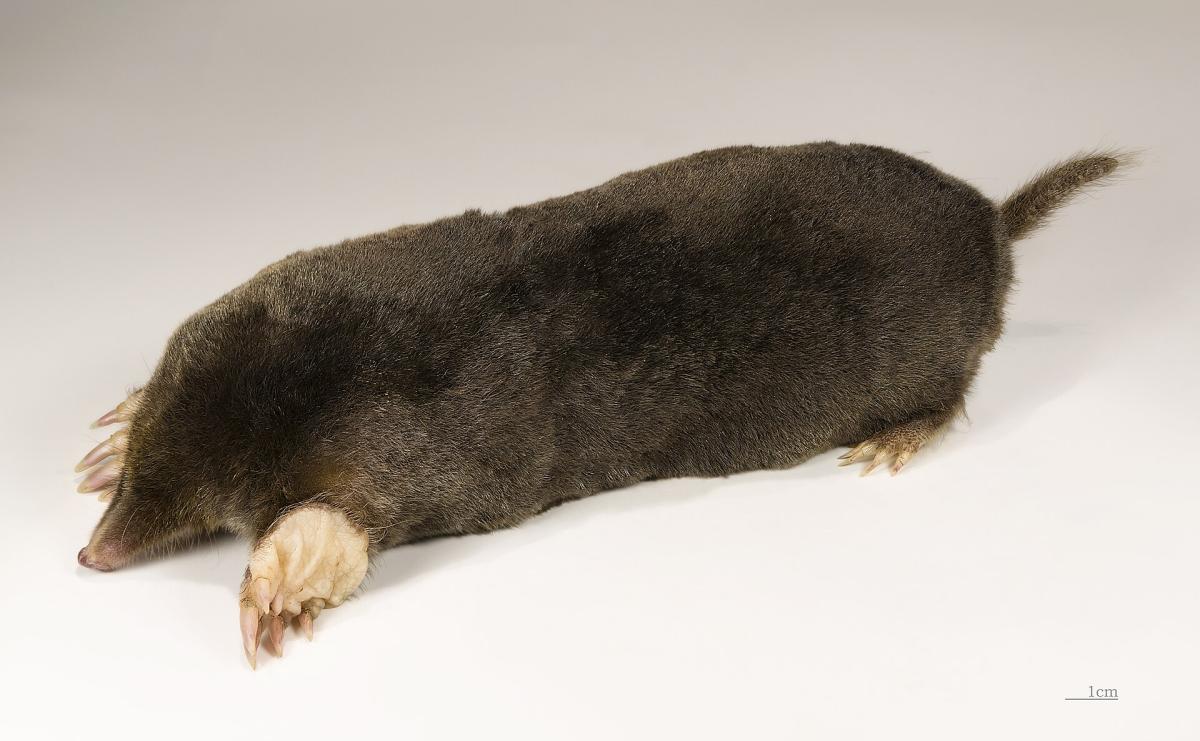
You will see the molehills long before you see the mole — most people never see one at all.
A cylindrical, velvet-black mammal built entirely for digging: enormous outward-facing spade-like front feet, a pointed pink snout, no visible ears and eyes so small they are hard to find. Moles are common across pasture, playing fields, gardens and verges around Dumfries, but live almost their whole lives underground. The molehill is not the burrow — it is the spoil pushed up from tunnelling below.
Behaviour
A mole digs a permanent network of tunnels that works as a trap: earthworms fall into them and the mole patrols the system to collect the catch. It can eat its own body weight in worms in a day and will bite the heads off surplus worms and store them alive in a larder. Moles are solitary and aggressive to each other outside the brief spring breeding season, and are active in shifts around the clock rather than by day or night.
When to see it
Quick facts
- Family
- Moles (Talpidae)
- Size
- Body 11–16 cm · weighs 70–130 g
- UK status
- Widespread and common; not protected
Photo by Didier Descouens, CC BY-SA 4.0, via Wikimedia Commons