Noctule bat
Nyctalus noctula
Print fact sheet (PDF)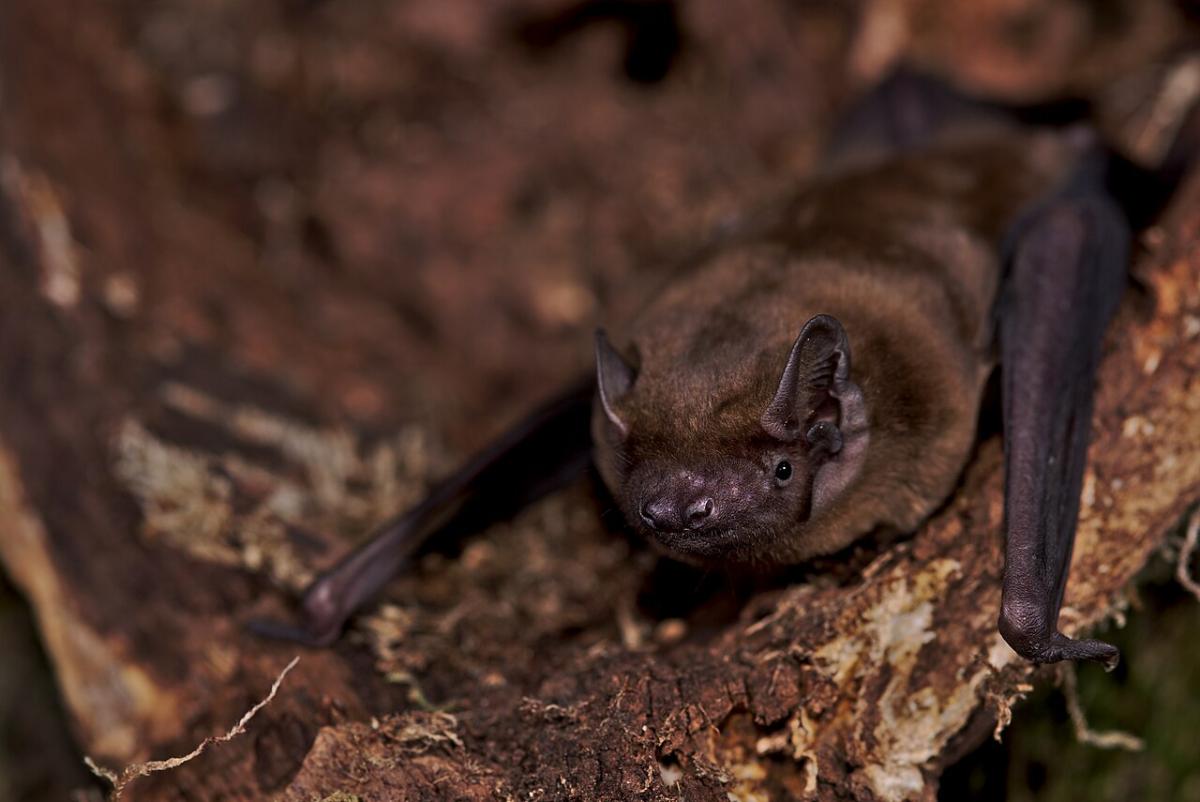
The UK's biggest bat, cutting fast and high overhead on summer evenings.
Britain's largest bat, the noctule is a powerful, fast-flying species with long, narrow wings built for hunting in open air. Rather than hugging hedgerows like smaller bats, it flies high and straight — often the first bat out at dusk, sometimes even before sunset — chasing moths, beetles and other large flying insects over parkland, water and treetop canopy. Noctules roost almost exclusively in tree holes, particularly old woodpecker holes, and a mature tree can hold the same colony for generations, which makes veteran trees along the Nith's wooded banks valuable roosting habitat. Like all UK bats it's a protected species. Through the Dumfries and Galloway winter it disappears into tree hollows or rock crevices to hibernate, emerging again as the weather warms. Its loud, low-pitched echolocation calls are audible to some human ears without a detector — a rare trait among British bats.
Behaviour
Distinctive for flying high and fast in open, direct lines rather than fluttering close to cover, often audible as a rhythmic chirping call overhead at dusk. Noctules can travel long distances between roosts and feeding grounds each night. Females form maternity colonies in tree holes through early summer, each usually raising a single pup.
When to see it
Quick facts
- Family
- Vespertilionidae
- Size
- UK's largest bat — wingspan 32–40cm, body 6–8cm
- UK status
- Protected; conservation priority species
Photo by Kamran Safi, CC BY-SA 4.0, via Wikimedia Commons