Otter
Lutra lutra
Print fact sheet (PDF)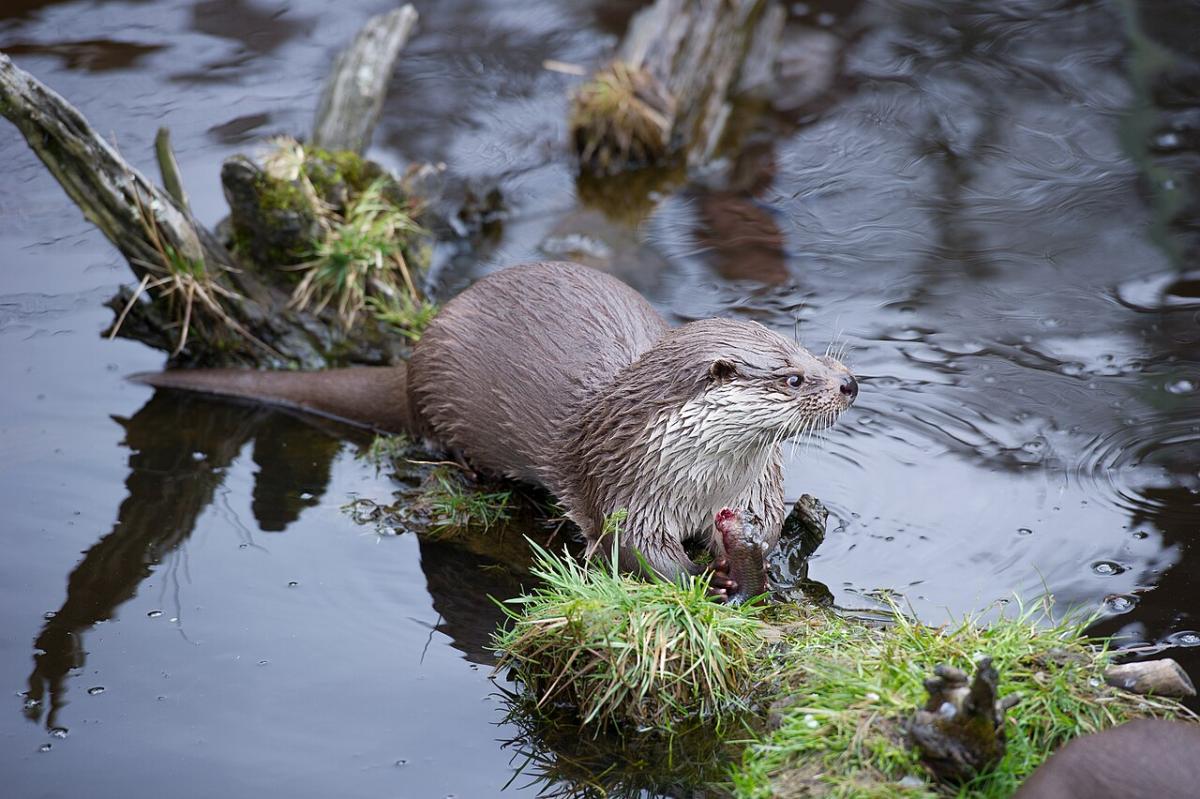
A sleek, whiskered hunter that slips along the Nith and Solway shore mostly unseen.
The otter is Britain's largest native mustelid, built for a life split between water and bank — a streamlined body, dense waterproof fur, and a thick tapering tail that acts as a rudder. Dumfries and Galloway holds some of Scotland's healthiest otter populations, with animals ranging along the River Nith, its tributaries, and the Solway coast, denning in a holt among tree roots, boulders or dense scrub. Otters were pushed to the brink by pesticide pollution in the mid-20th century; cleaner rivers have let them recover across the whole of the UK, and they're now a conservation success story, though still legally protected. Solitary and mostly nocturnal inland, coastal otters — including those around the Solway — are often more active by day, making the estuary shoreline one of the better local spots to catch a glimpse.
Behaviour
Mostly a solitary, territorial hunter, marking its range with distinctive tarry spraint left on prominent rocks and logs. It hunts by feel as much as sight, sweeping its whiskered muzzle through the water for fish, eels and crustaceans, and can stay submerged for several minutes. On land it moves with a bounding, humped-back lope, and cubs — born in a bankside holt — stay with their mother for over a year before dispersing.
When to see it
Quick facts
- Family
- Mustelidae
- Size
- Body 60–90cm plus a 35–45cm tail
- UK status
- Protected; population recovering after mid-20th-century decline
Photo by Alexander Leisser, CC BY-SA 4.0, via Wikimedia Commons