Pipistrelle bat
Pipistrellus pipistrellus
Print fact sheet (PDF)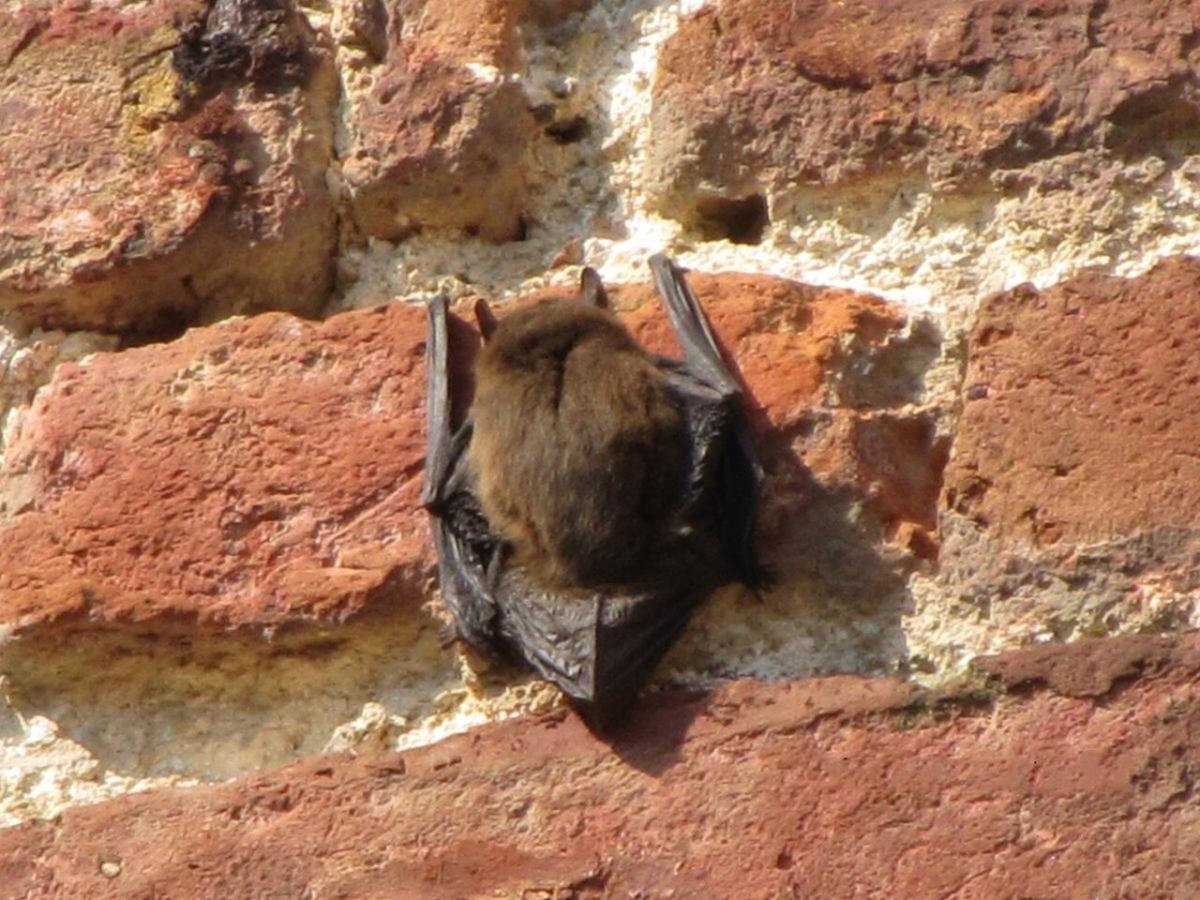
The UK's commonest and smallest bat, flickering over gardens and hedgerows at dusk.
The common pipistrelle is Britain's smallest and most widespread bat, light enough that several would balance against a two-pence piece. It emerges early at dusk and flies with a fast, jinking, erratic pattern low over gardens, hedgerows and streetlights, snapping up midges and other tiny insects — a single pipistrelle can eat several thousand in a night. Roosts are found in narrow gaps in buildings, behind hanging tiles, soffits and cavity walls, as well as in trees, and colonies often go unnoticed for years in the same roof space. It is a protected species under UK and European law. As the weather cools it moves into hibernation in similarly tight, sheltered crevices, sometimes the very roost used in summer, re-emerging as temperatures pick up again in spring — the exact timing shifting a little with the weather each year.
Behaviour
Erratic, fluttering flight low over gardens, hedges and water, hawking small flying insects on the wing and often the first bat seen at dusk over Dumfries streets and gardens. Its echolocation calls, sharp clicks best heard around 45kHz, are easily picked up on a bat detector. It roosts tightly packed into narrow crevices in buildings and trees, sometimes hundreds strong.
When to see it
Quick facts
- Family
- Vespertilionidae
- Size
- UK's smallest bat — wingspan 19–25cm, weighs about as much as a 2p coin
- UK status
- Protected; the UK's most widespread bat species
Photo by Égoïté, CC BY-SA 3.0, via Wikimedia Commons