Red Squirrel
Sciurus vulgaris
Print fact sheet (PDF)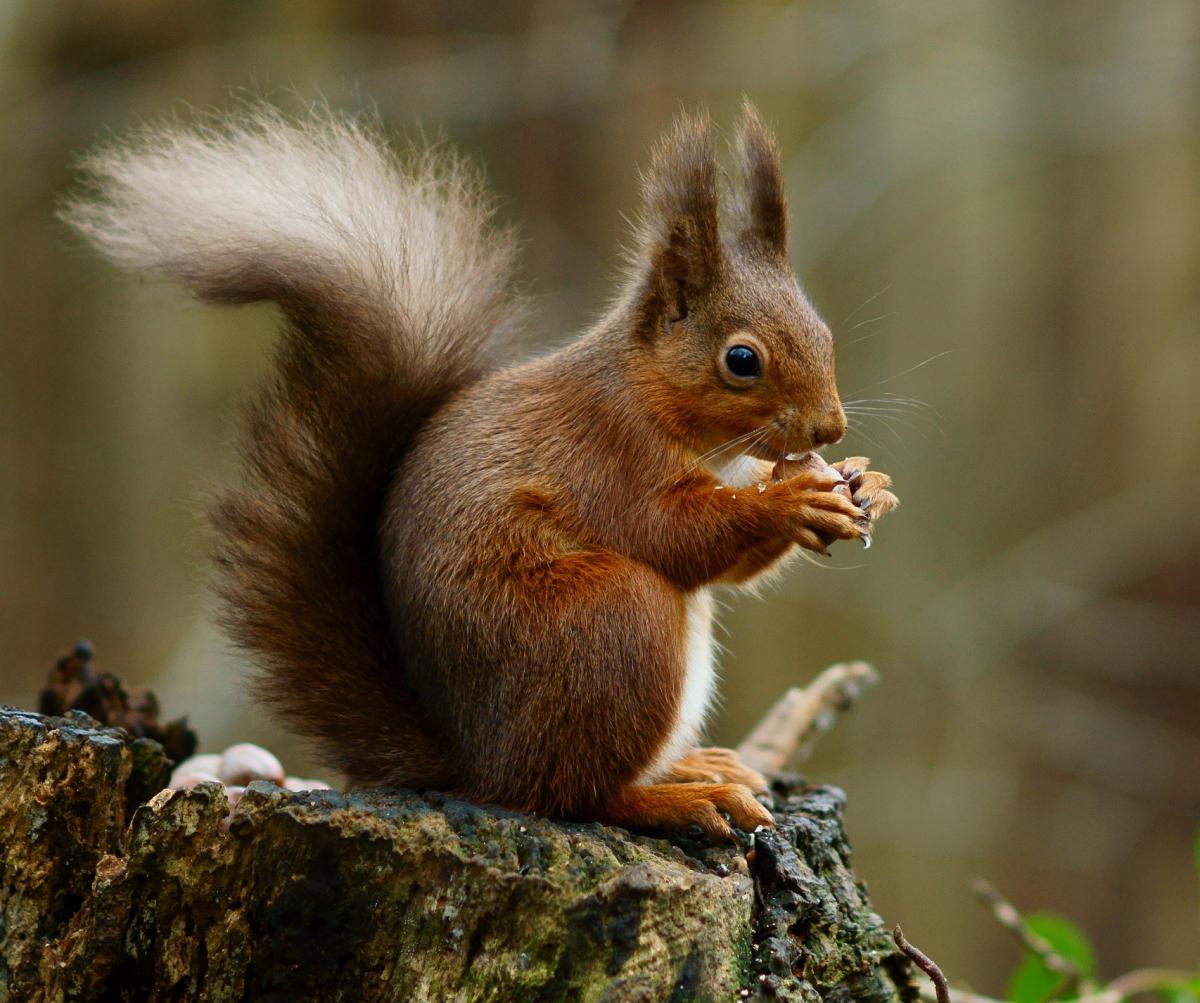
Dumfries and Galloway is one of the last strongholds in Britain — and holding the line takes active work.
Smaller and lighter than the grey squirrel, with a slim frame, a rich chestnut to dark brown coat that varies with season, a paler underside and — in winter — prominent ear tufts. Southern Scotland is one of the most important remaining refuges for red squirrels in Britain, and the conifer forests and mixed woodland around Dumfries hold them. Sightings are a genuine local privilege rather than a routine event.
Behaviour
Red squirrels are active by day, especially early morning, and spend far more time high in the canopy than greys do. They feed on conifer seed, stripping cones down to a ragged core, along with hazelnuts, fungi and tree buds, and cache food in scattered stores. They do not hibernate, but stay in the drey through the worst weather. Litters are born in spring and often again in summer.
When to see it
Quick facts
- Family
- Squirrels (Sciuridae)
- Size
- Body 19–23 cm plus a 15–20 cm tail
- UK status
- Protected; a conservation priority — southern Scotland is a stronghold
Photo by Peter Trimming, CC BY 2.0, via Wikimedia Commons