Roe Deer
Capreolus capreolus
Print fact sheet (PDF)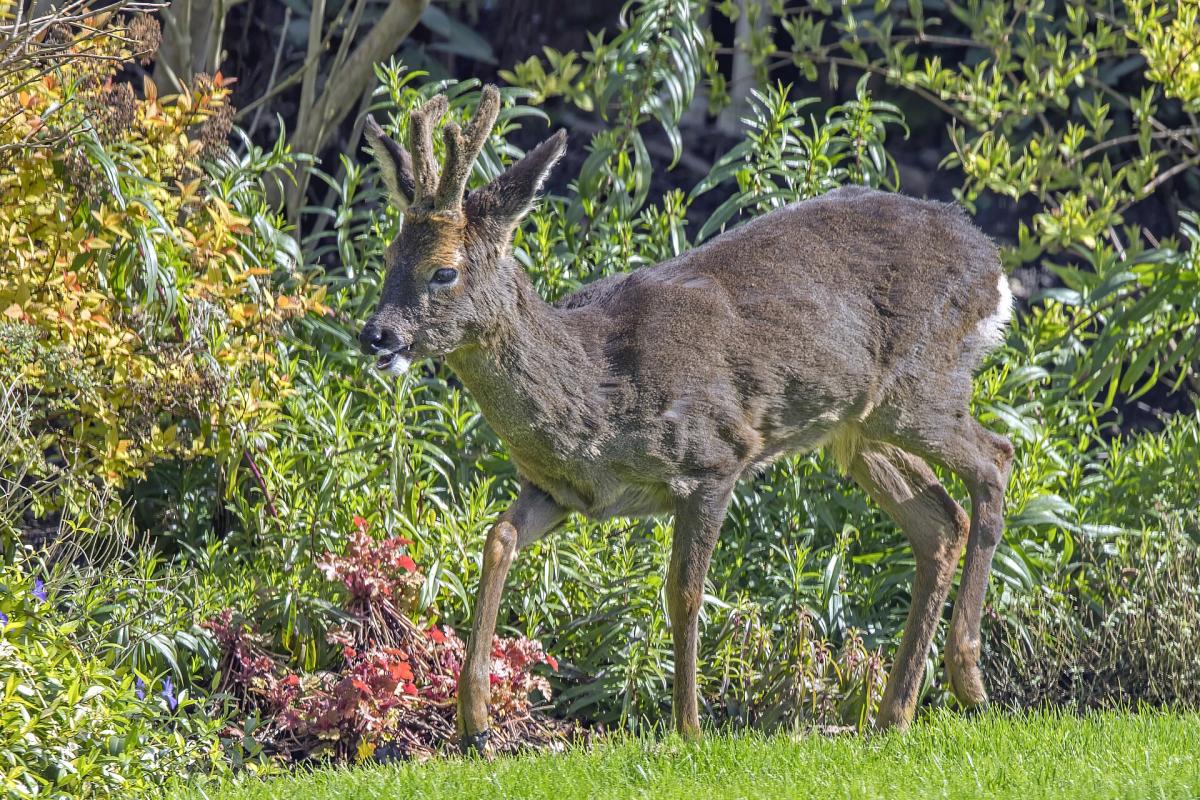
The deer you are most likely to meet around Dumfries — small, neat, and gone in three bounds.
A small native deer, foxy-red in summer and grey-brown in winter, with a black nose, white chin and a white rump patch but effectively no visible tail. Bucks carry short three-pointed antlers. Roe are common right around Dumfries — woodland, farmland, plantation edge and increasingly large gardens — and are usually seen alone or in twos and threes rather than in herds.
Behaviour
Roe are browsers, taking bramble, ivy, tree shoots and herbs, and are most visible at dawn and dusk. The rut is in late July and August, unusually early for a deer, and is followed by delayed implantation — the embryo pauses for months so that kids are born the following May. The alarm call is a startling dog-like bark. Bucks fray saplings with their antlers in spring, leaving obvious stripped bark.
When to see it
Quick facts
- Family
- Deer (Cervidae)
- Size
- Shoulder height 60–75 cm
- UK status
- Native; common, with close seasons set in law
Photo by Charles J. Sharp, CC BY-SA 4.0, via Wikimedia Commons