Soprano Pipistrelle
Pipistrellus pygmaeus
Print fact sheet (PDF)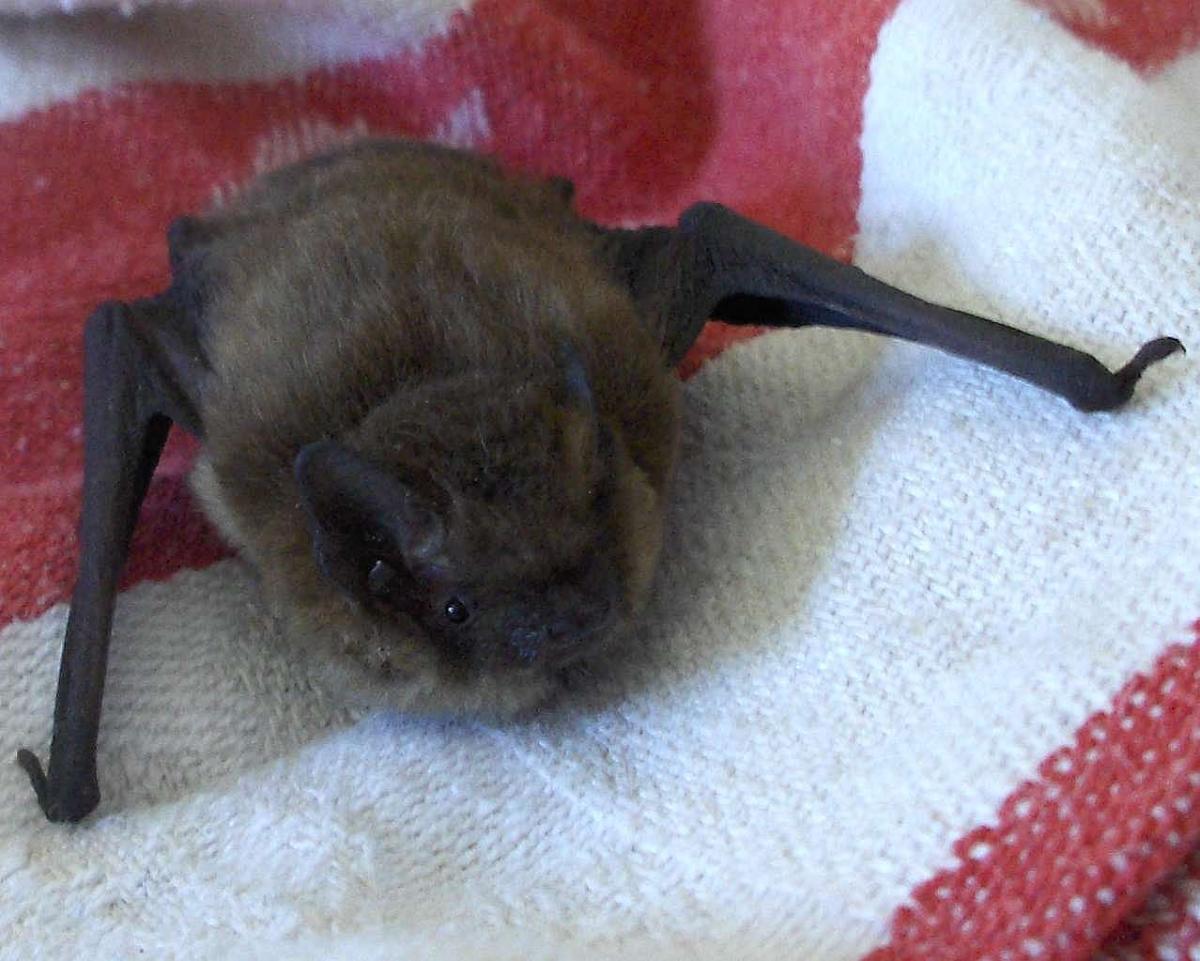
Identical to the common pipistrelle by eye — it took a bat detector to prove it was a separate species.
A tiny bat, all but indistinguishable from the common pipistrelle in the hand, with dark reddish-brown fur and a blackish face. The two were only recognised as separate species in the 1990s, when researchers noticed that pipistrelles echolocated at two distinct frequencies: the soprano calls at around 55 kHz, the common at 45. Soprano pipistrelles favour riparian habitat, so the Nith and its wooded corridors suit them.
Behaviour
Soprano pipistrelles emerge shortly after sunset and hunt small flies over water, along treelines and around lit areas, taking thousands of insects in a night in fast, jerky, twisting flight. Maternity roosts, in buildings, can be very large — sometimes over a thousand females. They hibernate from around November in crevices, trees and buildings, waking in mild spells to drink.
When to see it
Quick facts
- Family
- Vesper bats (Vespertilionidae)
- Size
- Wingspan 19–23 cm · echolocates at around 55 kHz
- UK status
- Protected under UK and European law
Photo by Magne Flåten, CC BY-SA 3.0, via Wikimedia Commons