Water Shrew
Neomys fodiens
Print fact sheet (PDF)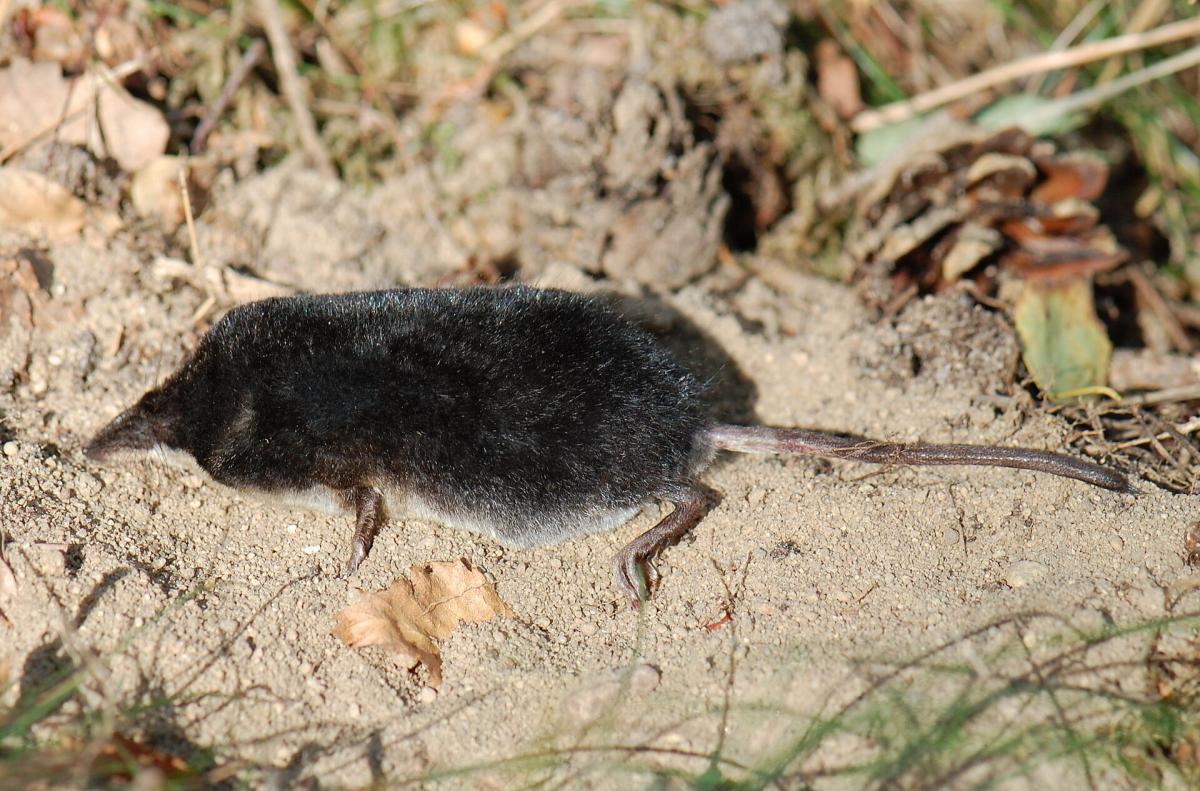
Britain's only venomous mammal, and it swims with a silver skin of trapped air.
Our largest shrew and the most striking: glossy black above, sharply cut off against a white or silvery belly, with stiff bristles fringing the feet and tail that work as paddles and a keel. Water shrews live along the clean, well-vegetated burns, ditches and stream margins around Dumfries, and although they are widespread they are seldom seen — they are secretive and their habitat is easily damaged.
Behaviour
Water shrews dive to hunt caddis larvae, freshwater shrimps, snails and even small fish, and their fur traps so much air that a swimming shrew looks silver and bobs back to the surface like a cork. The saliva contains a venom that paralyses prey — the only British mammal with such a thing, though it is harmless enough to us. They need clean water with plenty of bankside cover, so their presence is a good sign for a burn.
When to see it
Quick facts
- Family
- Shrews (Soricidae)
- Size
- Body 6.5–9.5 cm plus a 4.5–7.5 cm tail
- UK status
- Protected from certain methods of killing; widespread but seldom seen
Photo by Accipiter (R. Altenkamp, Berlin), CC BY-SA 3.0, via Wikimedia Commons