Ash
Fraxinus excelsior
Print fact sheet (PDF)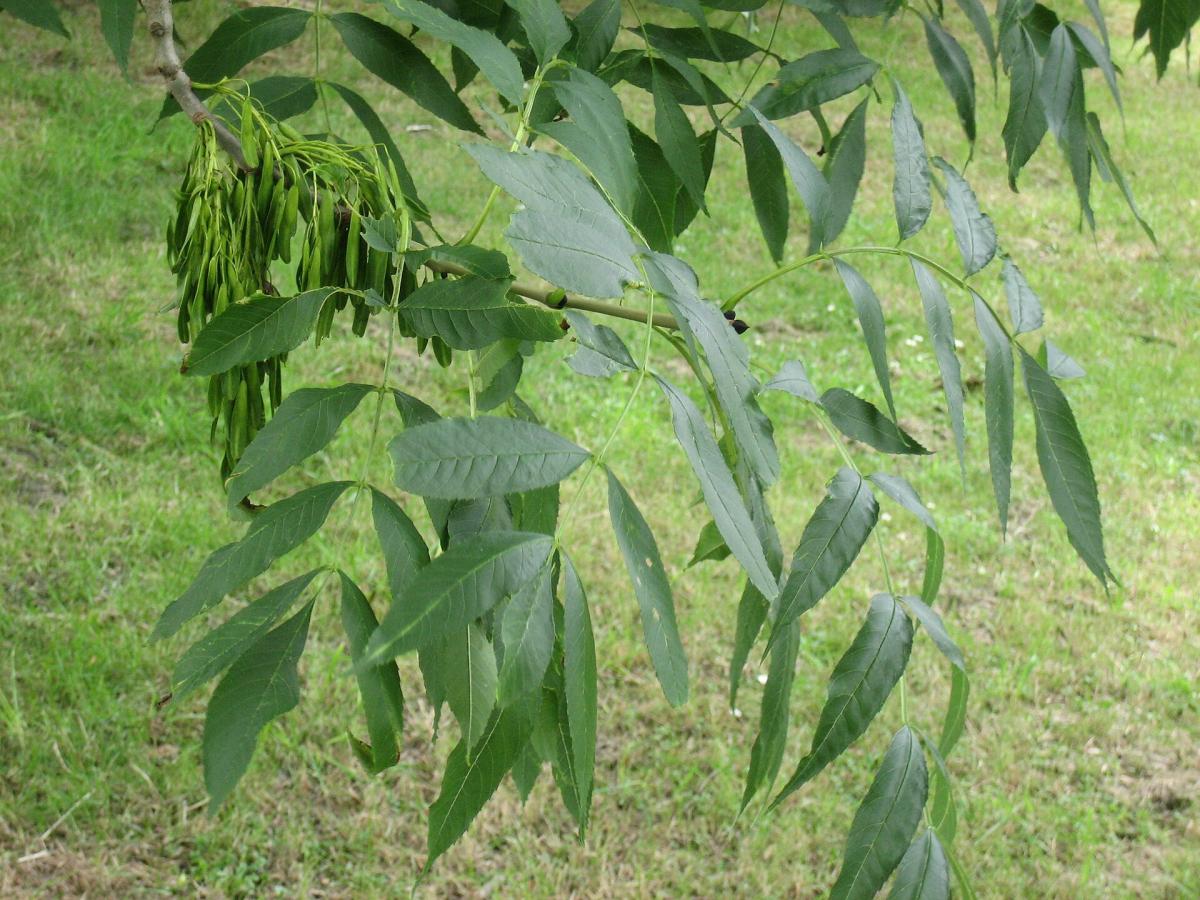
Sooty-black buds in winter — and a tree now facing a disease that may take most of them.
A tall, airy deciduous tree with pinnate leaves of several paired leaflets, smooth grey bark that fissures with age, and distinctive matt-black winter buds that identify it at a glance. Ash is one of the commonest trees around Dumfries — hedgerow, woodland, riverbank and field corner — and casts a notably light shade, so ash woodland has a rich ground flora.
Behaviour
Ash comes into leaf late and drops its leaves early, which is why bluebells and dog's mercury do so well beneath it. Seeds hang in bunches of winged 'keys' that spin as they fall. The species now faces ash dieback, a fungal disease that has spread across Britain and is expected to kill a large proportion of trees, though a minority show natural tolerance and are the basis of hope for the species.
When to see it
Quick facts
- Family
- Olives (Oleaceae)
- Height
- Up to 35 m
- Status
- Native; common, but threatened by ash dieback
Photo by No machine-readable author provided, CC BY 2.5, via Wikimedia Commons