Blackthorn
Prunus spinosa
Print fact sheet (PDF)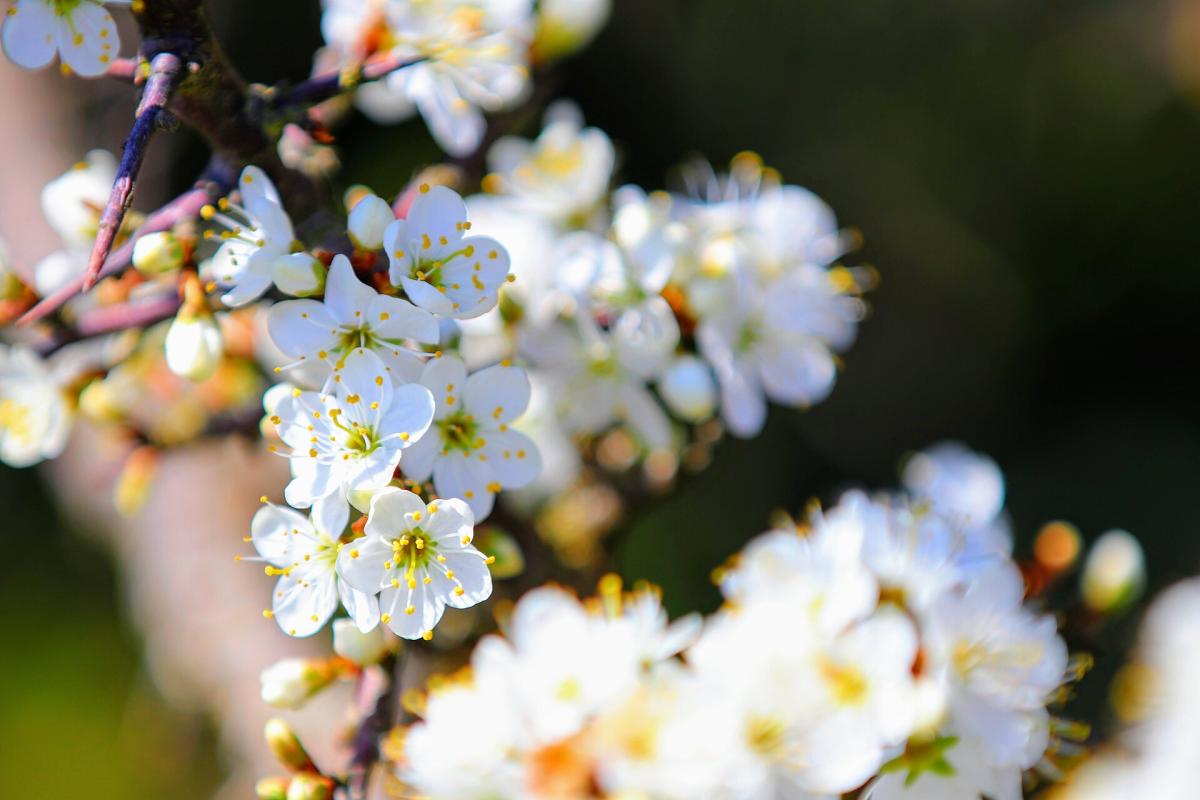
Flowers on bare black twigs before any leaf — a cold snap during it is still called a blackthorn winter.
A dense, viciously thorny deciduous shrub with near-black bark, small oval leaves and a froth of white blossom that appears in March and April on completely bare twigs — the opposite of hawthorn, which leafs first. In autumn it carries blue-black sloes with a waxy bloom. Blackthorn forms impenetrable thickets in hedgerows and on rough ground around Dumfries.
Behaviour
It suckers vigorously from the roots, spreading outwards into scrub and creating dense, spiny thickets that are superb nesting cover for warblers, finches and thrushes. The thorns cause a notably nasty infection if they break the skin. Sloes are hard and mouth-drying until softened by frost, and are traditionally picked afterwards for sloe gin.
When to see it
Quick facts
- Family
- Roses (Rosaceae)
- Height
- Up to 7 m; usually dense thicket
- Status
- Native; common in hedgerow and scrub
Photo by Cyr~commonswiki, CC BY-SA 3.0, via Wikimedia Commons