Bracken
Pteridium aquilinum
Print fact sheet (PDF)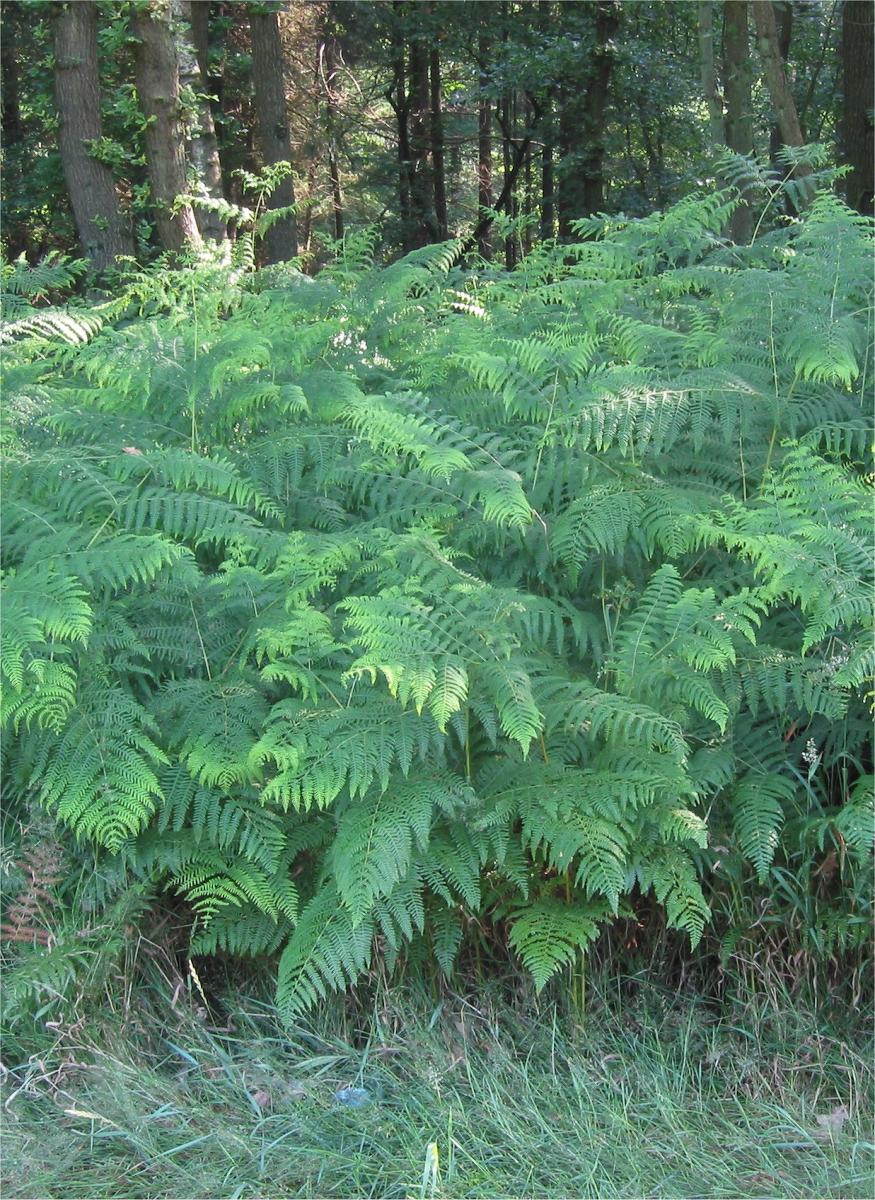
Possibly the most widespread plant on earth, and a single clone can cover a hillside.
A large, coarse fern with tall, triangular, three-times-divided fronds borne singly on stout stalks rather than in a shuttlecock — the way to tell it from every other fern here. Bracken covers extensive areas of hillside, moorland edge, rough grazing and woodland clearing throughout Dumfries and Galloway, turning a distinctive rust-brown in autumn.
Behaviour
It spreads by deep, tough underground rhizomes, so a whole hillside stand can be one clone, potentially centuries old. It shades out almost everything beneath and its dense litter suppresses regeneration, which makes it a serious problem on grazing and moorland. It is carcinogenic to livestock, and its litter shelters the sheep ticks that carry Lyme disease.
When to see it
Quick facts
- Family
- Brackens (Dennstaedtiaceae)
- Frond
- Up to 2 m or more, borne singly
- Status
- Native; abundant, and invasive on grazing and moorland
Photo by Rasbak, CC BY-SA 3.0, via Wikimedia Commons