Common Butterfly Bush
Buddleja davidii
Print fact sheet (PDF)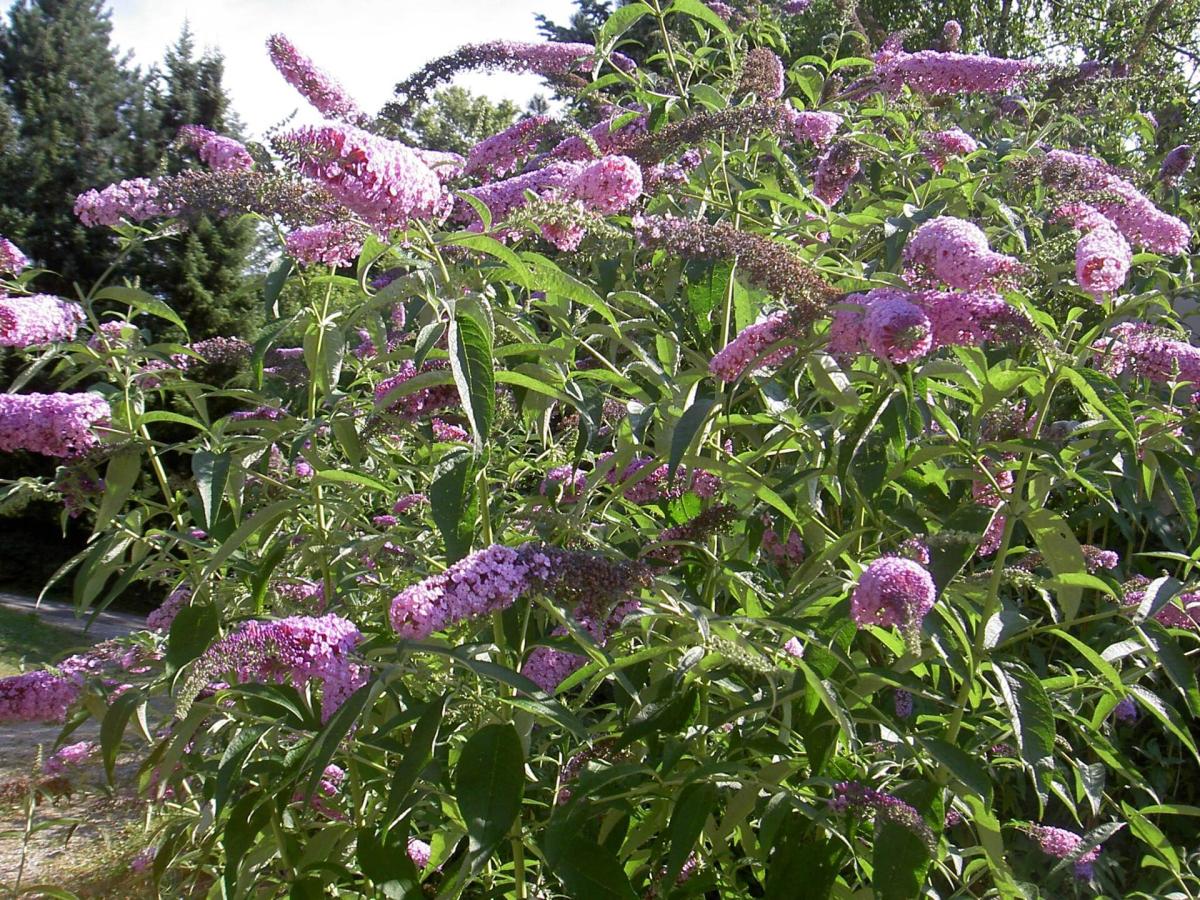
Feeds butterflies magnificently and wrecks masonry thoroughly — both at once.
A vigorous deciduous shrub with long arching stems, narrow grey-green leaves and dense tapering spikes of small, honey-scented lilac-purple flowers with an orange eye. Introduced from China, buddleia has naturalised widely and grows on walls, railway sidings, derelict buildings, riverbanks and waste ground around Dumfries.
Behaviour
The flowers are exceptionally attractive to butterflies — peacocks, small tortoiseshells, red admirals and painted ladies all crowd onto them in August — which is where the name comes from. But it is also genuinely invasive: it seeds prolifically into masonry, and the roots split mortar, damage walls and bridges and displace native vegetation on riverbanks and shingle.
When to see it
Quick facts
- Family
- Figworts (Scrophulariaceae)
- Height
- Up to 5 m
- Status
- Introduced and invasive; damages masonry, but valuable to butterflies
Photo by IKAl 15:22, 23 July 2007 (UTC), CC BY-SA 2.5, via Wikimedia Commons