Common Comfrey
Symphytum officinale
Print fact sheet (PDF)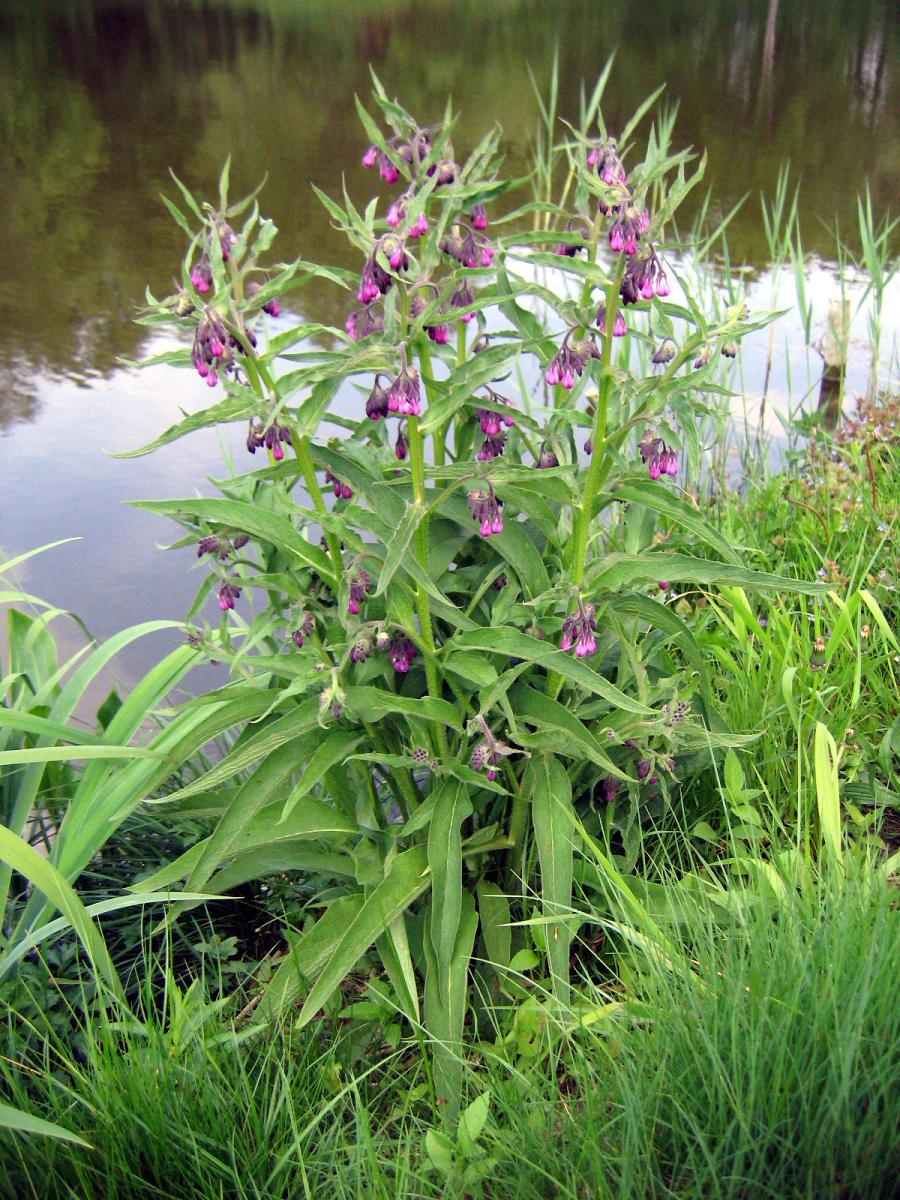
Knitbone — and short-tongued bumblebees simply bite a hole in the back of the flower.
A robust, bristly perennial with large coarse leaves that run down the stem in wings, and drooping one-sided clusters of tubular bell flowers in cream, pink or purple. Common comfrey grows on riverbanks, ditches, damp waste ground and around old gardens and farmsteads throughout the Dumfries area.
Behaviour
The long flower tube is designed for long-tongued bees such as the garden bumblebee. Short-tongued species — buff-tailed and white-tailed bumblebees — bypass it entirely by biting a hole at the base and stealing the nectar without pollinating, and honey bees then use the same holes. The old name knitbone reflects long use in poultices; gardeners still use it for liquid feed.
When to see it
Quick facts
- Family
- Borages (Boraginaceae)
- Height
- 50–120 cm
- Status
- Native; common on damp and disturbed ground
Photo by Agnieszka Kwiecień (Nova), CC BY 2.5, via Wikimedia Commons