Common Nettle
Urtica dioica
Print fact sheet (PDF)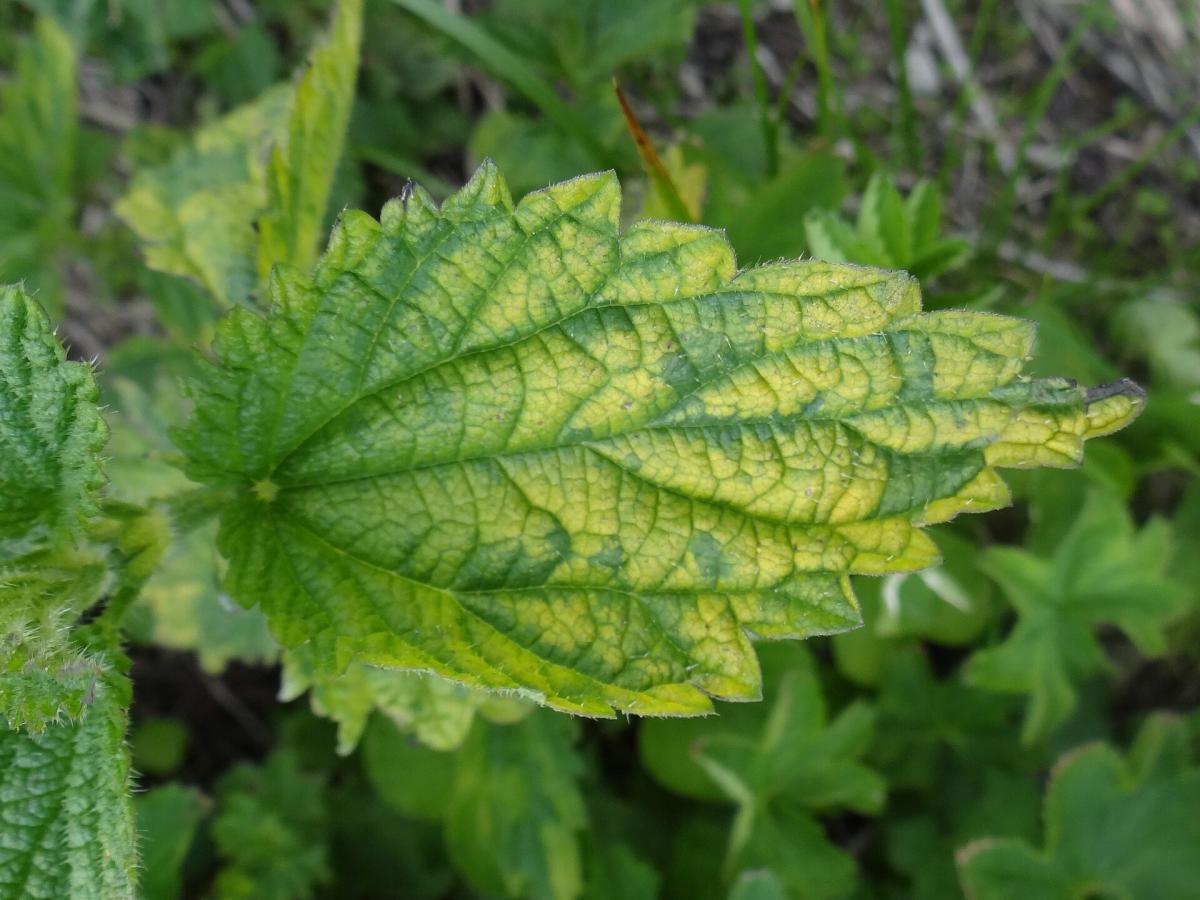
The sting is a hypodermic needle made of glass — and four of our best butterflies depend on it.
A tall perennial with pointed, coarsely toothed, opposite leaves and drooping catkin-like strings of tiny green flowers, the whole plant armed with stinging hairs. Nettles are abundant wherever ground is disturbed and nutrient-rich — farmyards, riverbanks, waste ground, hedge bottoms, old middens — throughout the Dumfries area.
Behaviour
Each sting is a hollow silica hair with a brittle tip that snaps off on contact and injects a mix of histamine and other irritants. Nettles need high phosphate, so a dense stand often marks old habitation, a byre or a badger latrine. Ecologically they are essential: small tortoiseshell, peacock, red admiral and comma all lay on nettle, and none has an alternative.
When to see it
Quick facts
- Family
- Nettles (Urticaceae)
- Height
- 60–150 cm
- Status
- Native; abundant, and foodplant of four common butterflies
Photo by Jerzy Opioła, CC BY-SA 4.0, via Wikimedia Commons