Common Orange Lichen
Xanthoria parietina
Print fact sheet (PDF)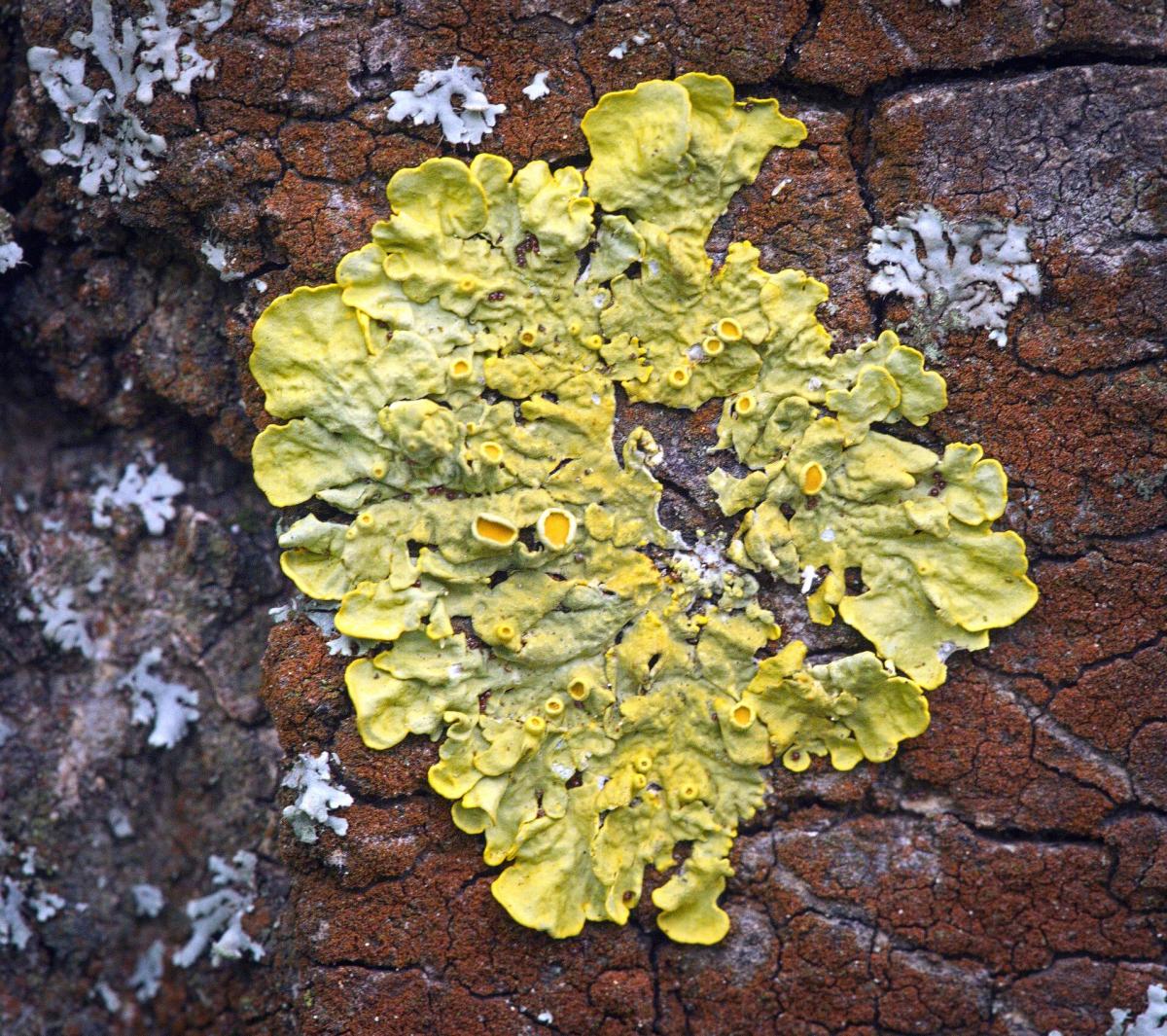
The bright orange crust on a wall or gravestone — and it thrives on nitrogen pollution.
A conspicuous leafy lichen forming bright orange to yellow-green rosettes with wavy, lobed margins and disc-shaped fruiting bodies. It grows on walls, gravestones, roof tiles, rocks and the bark of nutrient-enriched trees throughout the Dumfries area, and is one of the most easily recognised lichens in Britain.
Behaviour
A lichen is not one organism but a partnership of a fungus with an alga, the fungus providing structure and the alga photosynthesising. This species is nitrophilous — it flourishes where nitrogen is high, so it is abundant near farmland, roadsides and bird perches, and its spread is itself an indicator of nitrogen enrichment. The orange pigment is a natural sunscreen; shaded specimens are greener.
When to see it
Quick facts
- Family
- Teloschistaceae
- Size
- Rosettes 2–10 cm across
- Status
- Native; abundant, and an indicator of nitrogen enrichment
Photo by hedera.baltica from Wrocław, Poland, CC BY-SA 2.0, via Wikimedia Commons