Common Ragwort
Jacobaea vulgaris
Print fact sheet (PDF)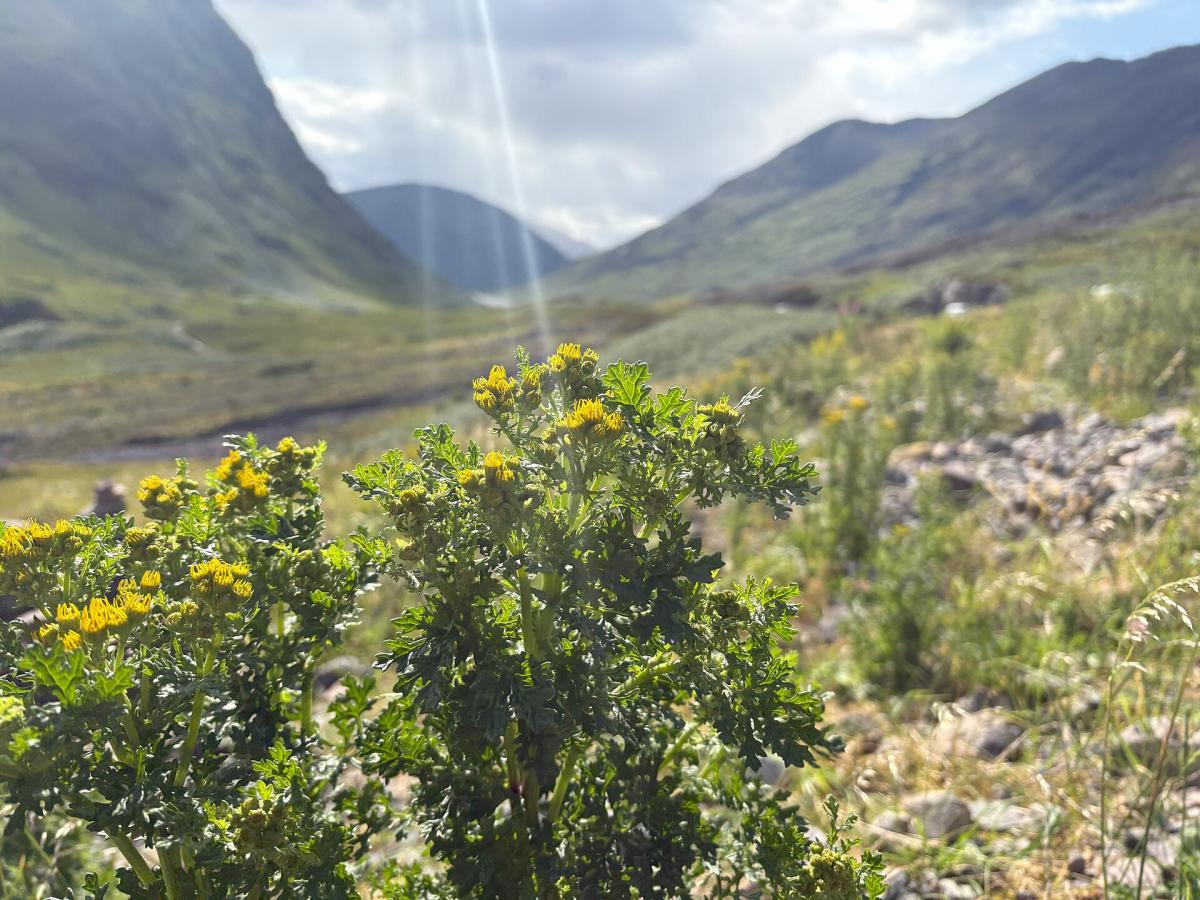
Poisonous to horses, and indispensable to a great many insects — both things are true.
A tall biennial or short-lived perennial with deeply cut, ragged leaves and flat-topped clusters of bright golden-yellow daisy flowers. Common ragwort grows on verges, waste ground, rough grazing and neglected pasture throughout the Dumfries area, and is one of the most conspicuous late-summer plants in the farmed landscape.
Behaviour
Ragwort contains alkaloids that cause cumulative liver damage in horses and cattle, and it is listed as an injurious weed where it threatens grazing — though animals avoid it when growing and are mainly poisoned by it in dried hay. Ecologically it is exceptionally valuable: it supports well over a hundred insect species, including the cinnabar moth, for which it is the sole foodplant.
When to see it
Quick facts
- Family
- Daisies (Asteraceae)
- Height
- 30–150 cm
- Status
- Native; an injurious weed near grazing, but a key insect plant
Photo by Joecompan, CC BY-SA 4.0, via Wikimedia Commons