Common Valerian
Valeriana officinalis
Print fact sheet (PDF)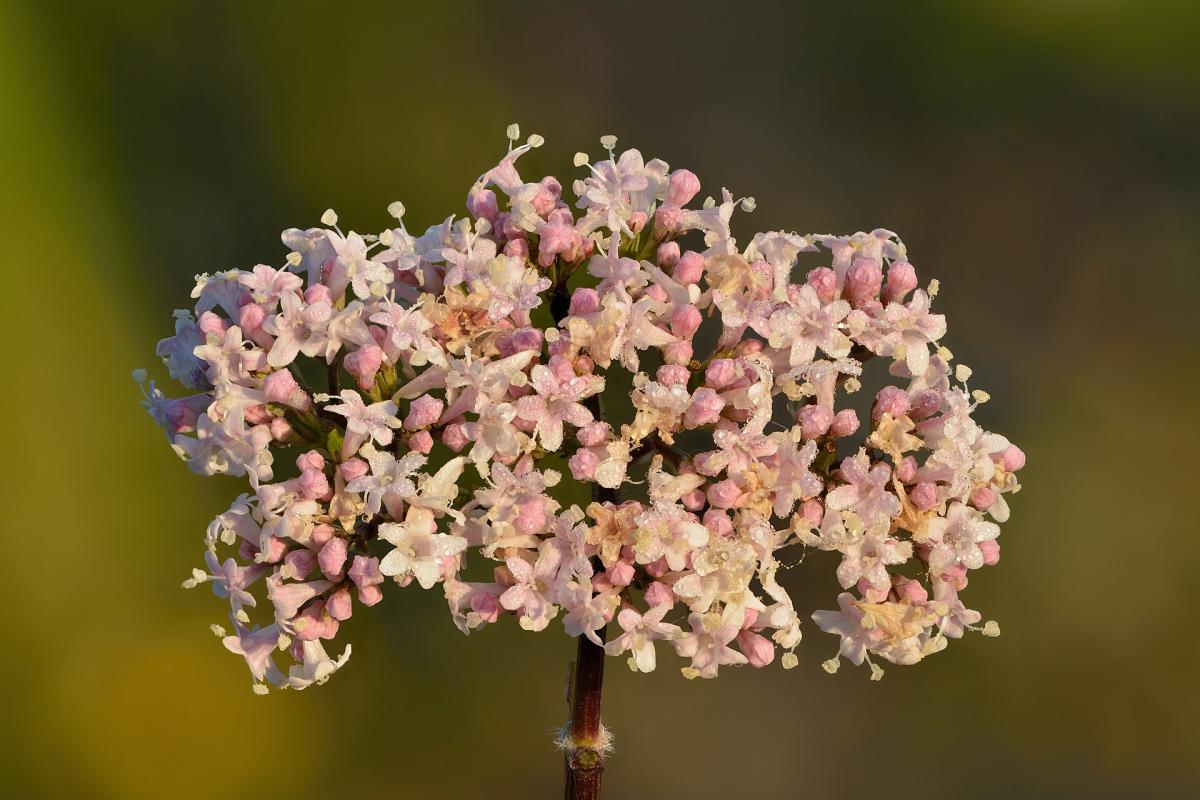
The root smells so strongly of old socks that cats react to it like catnip.
A tall perennial of damp ground with pinnate leaves in opposite pairs and broad, domed heads of small pale pink or white flowers. Common valerian grows in damp meadows, ditch sides, riverbanks and wet woodland margins around Dumfries. The flowers are pleasantly scented, but the root has a strong and famously unpleasant smell.
Behaviour
Preparations of the root have been used as a sedative and sleep aid for many centuries, and the plant remains in herbal use today. The smell comes from valeric acid, and cats and rats both react strongly to it — a detail that attached itself to the Pied Piper legend. The flat flower heads are heavily worked by hoverflies, beetles and small bees.
When to see it
Quick facts
- Family
- Honeysuckles (Caprifoliaceae)
- Height
- 50–150 cm
- Status
- Native; common on damp ground
Photo by Ivar Leidus, CC BY-SA 4.0, via Wikimedia Commons