Elder
Sambucus nigra
Print fact sheet (PDF)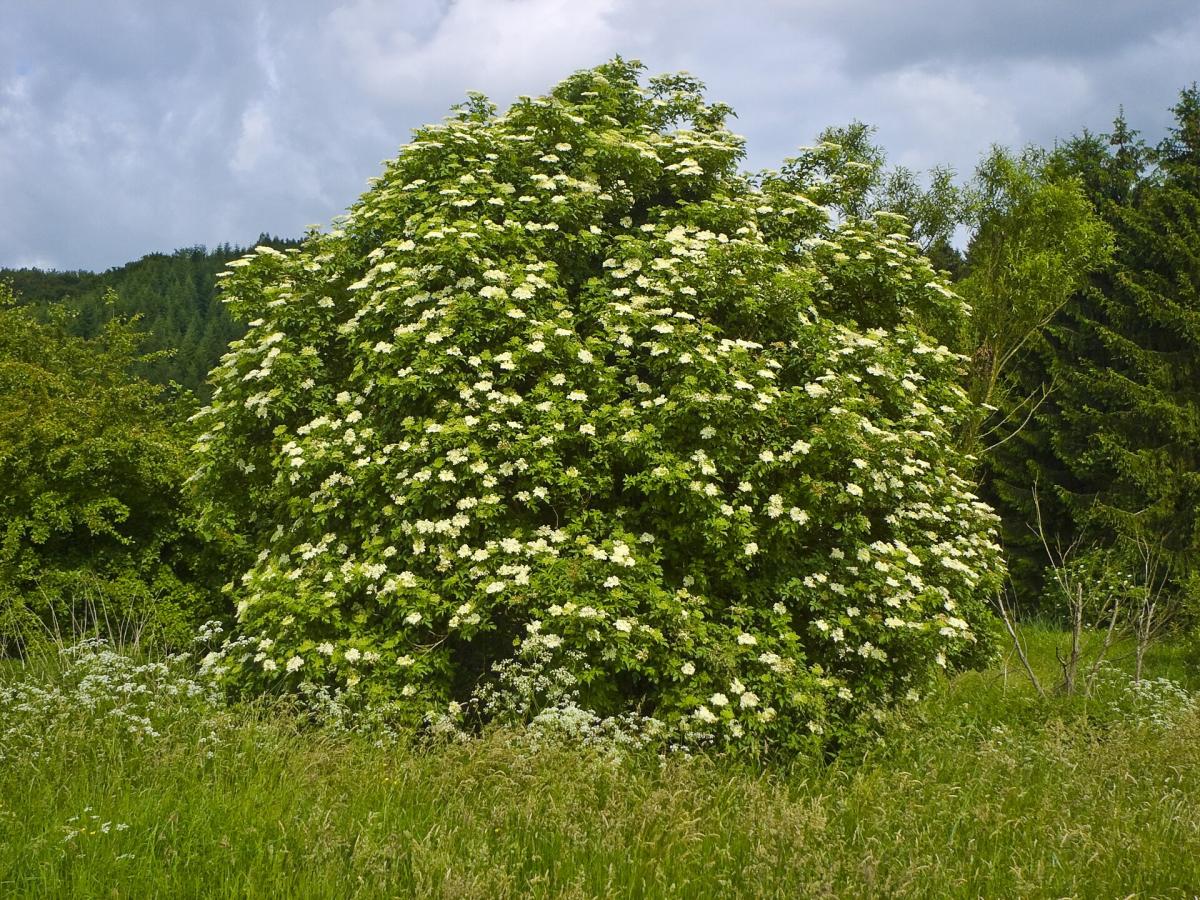
Grows anywhere the ground has been disturbed, and gives two harvests a year.
A fast-growing, short-lived deciduous shrub with corky furrowed bark, pinnate leaves and broad flat heads of creamy, heavily scented flowers in June, followed by drooping bunches of small purple-black berries. Elder springs up readily on disturbed and nutrient-rich ground — old walls, farmyards, rabbit warrens, waste ground — throughout the Dumfries area.
Behaviour
It thrives where nitrogen is high, which is why it appears around badger setts, rabbit warrens and old middens, and it is often the first woody plant on neglected ground. The berries are taken heavily by blackcaps, starlings and thrushes in late summer. Both flowers and berries have long been used for cordial and wine, and the tree carries a great deal of protective folklore.
When to see it
Quick facts
- Family
- Moschatel family (Adoxaceae)
- Height
- Up to 10 m
- Status
- Native; common on disturbed, nutrient-rich ground
Photo by Willow, CC BY 2.5, via Wikimedia Commons