Fairy Foxglove
Erinus alpinus
Print fact sheet (PDF)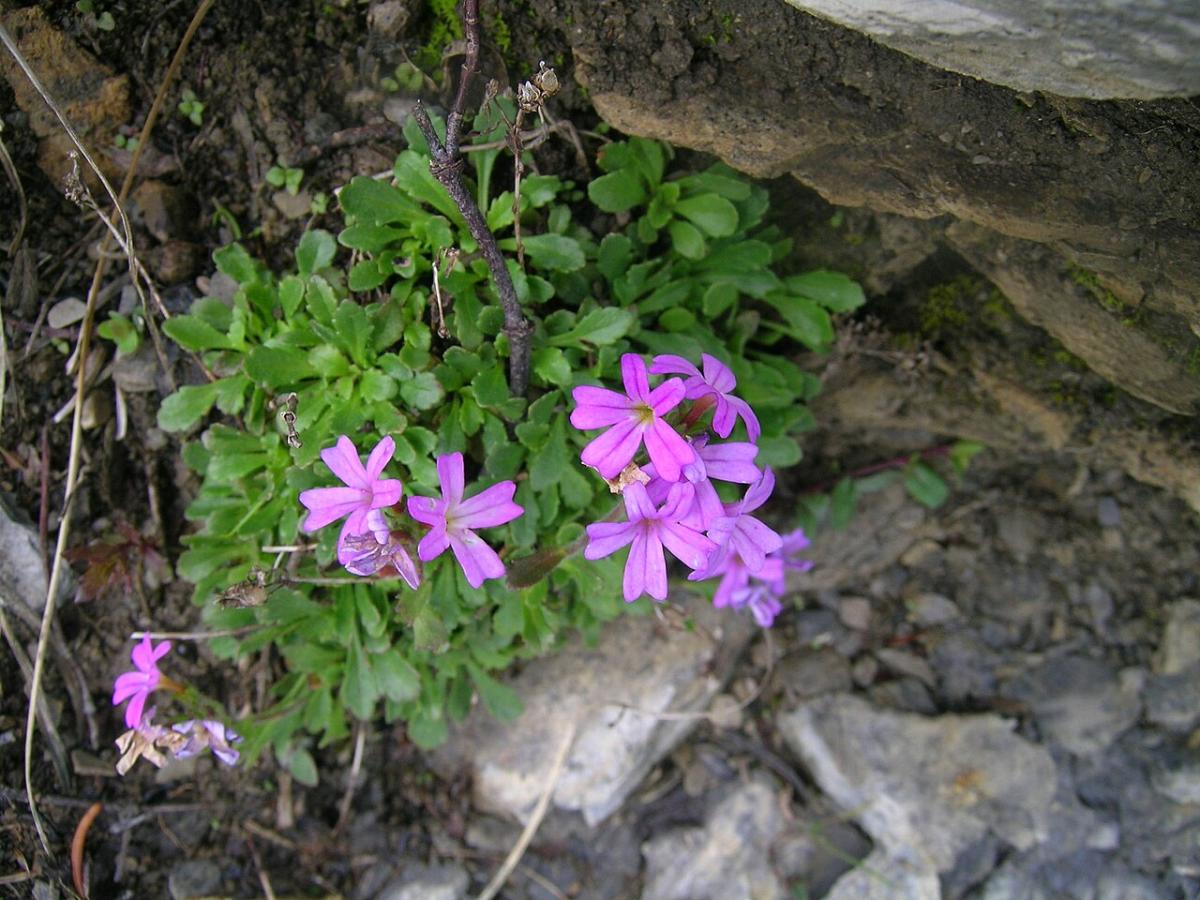
A pink-flowered wall specialist, no bigger than a fingertip.
Fairy foxglove is a diminutive perennial that wedges itself into the tiniest cracks in old walls and paving, forming low mats of narrow, slightly hairy leaves topped with small tubular flowers in shades of pink, mauve or occasionally white. Despite the name, it isn't a true foxglove — the resemblance is in the shape of the flower rather than any close relationship — and the whole plant rarely reaches more than a few centimetres tall. It isn't native to Britain, having arrived from the mountains of central and southern Europe as a rock-garden plant, but it has naturalised thoroughly on old walls and has been recorded around Dumfries for well over a century. Flowers open from April through to August, at their best through May and June, with the low semi-evergreen rosettes of leaves remaining visible in wall crevices for the rest of the year.
Behaviour
Fairy foxglove's shallow, wiry roots let it establish in the thinnest smear of lime mortar, where it survives baking summer heat and hard frost alike. Individual plants are often short-lived, but they self-seed prolifically into nearby cracks, so a colony can persist on the same wall for generations even as individual rosettes come and go. Flowering often continues in flushes rather than one continuous show through the summer.
When to see it
Quick facts
- Family
- Plantains (Plantaginaceae)
- Flower
- Tubular, around 1 cm, pink to mauve
- Origin
- Naturalised; native to the mountains of central & southern Europe
Photo by Thomas Mathis, CC BY-SA 3.0, via Wikimedia Commons