Goat Willow
Salix caprea
Print fact sheet (PDF)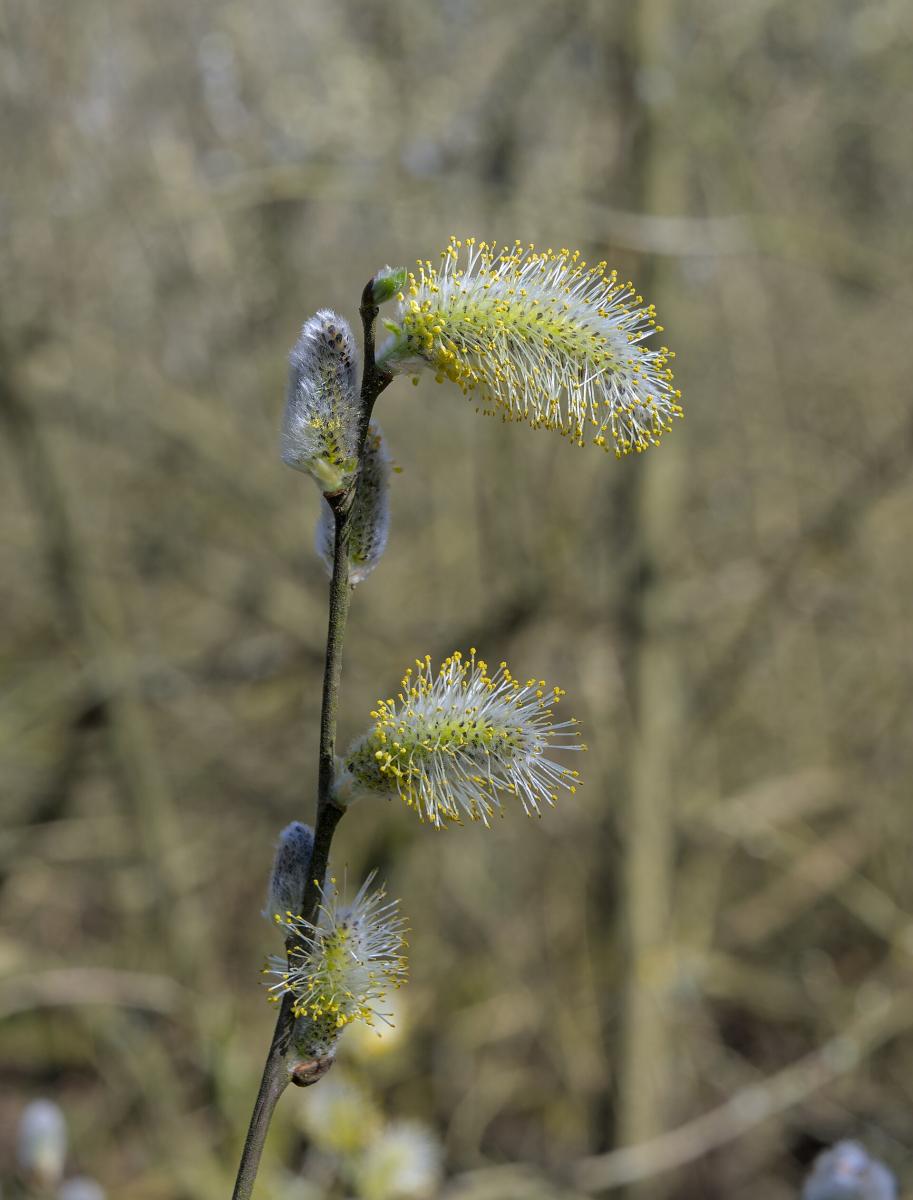
The pussy willow — silver-grey buds that turn into the first real bee food of the year.
A small, spreading deciduous tree of damp ground, woodland edge and waste places, with broad, oval, softly grey-hairy leaves quite unlike the narrow leaves of most willows. In early spring it carries the familiar silvery buds that open into fat catkins — bright yellow and pollen-laden on male trees, greener on females. It is common throughout the Dumfries area.
Behaviour
Goat willow flowers before almost anything else, and those catkins are a critical early source of pollen and nectar for queen bumblebees emerging from hibernation and for early hoverflies and moths. The seed is minute and cottony, blowing far and germinating on bare damp ground. Willows support an exceptionally large number of associated insect species.
When to see it
Quick facts
- Family
- Willows (Salicaceae)
- Height
- Up to 10 m
- Status
- Native; common, and a key early nectar source
Photo by Trougnouf (Benoit Brummer), CC BY 4.0, via Wikimedia Commons