Harebell
Campanula rotundifolia
Print fact sheet (PDF)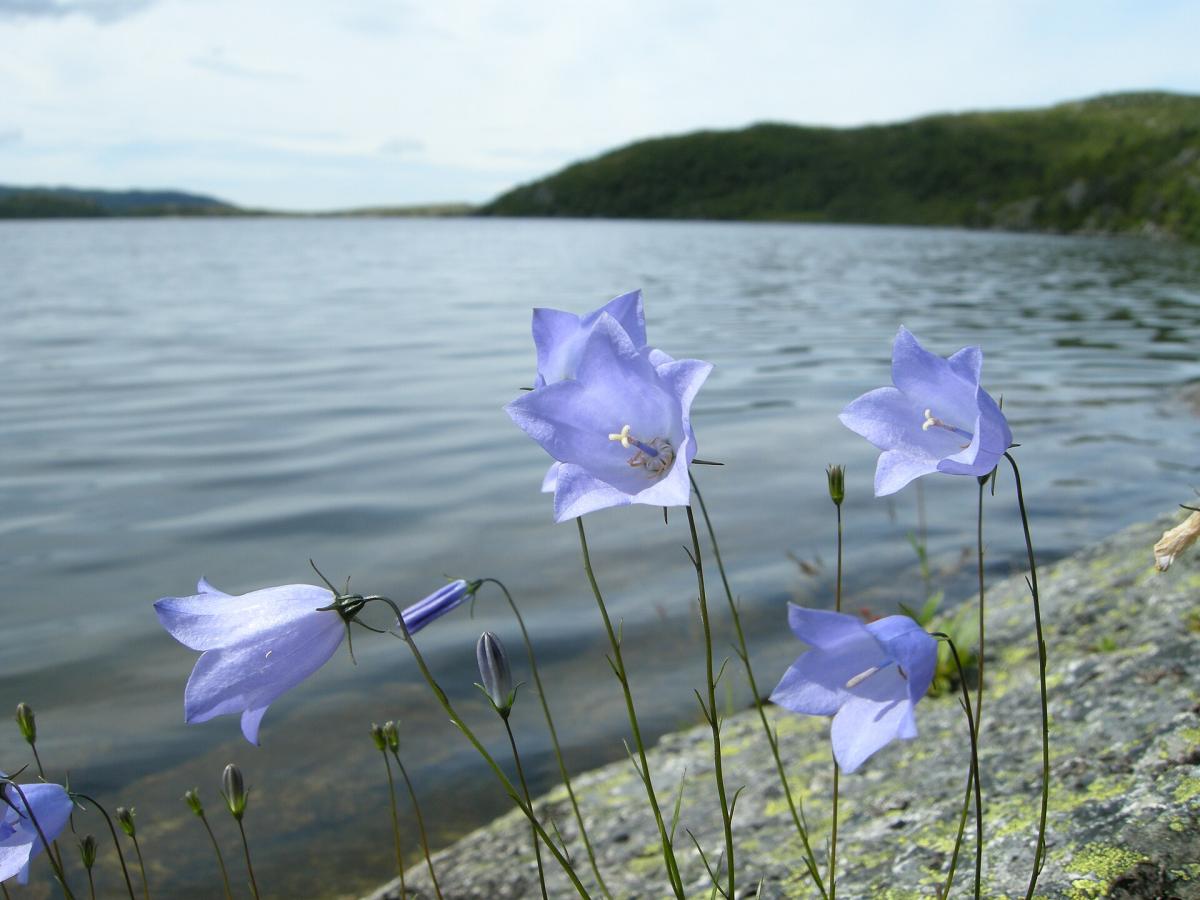
The bluebell of Scotland — and nothing at all to do with the woodland bluebell.
A delicate perennial with wiry stems carrying nodding, pale violet-blue bell flowers, and — confusingly, given the name rotundifolia — round basal leaves that have usually withered by flowering time, leaving only narrow stem leaves. Harebells grow on dry banks, unimproved grassland, dunes and old walls around Dumfries.
Behaviour
In Scotland this is the plant meant by 'bluebell', which causes endless confusion with the woodland bluebell of English usage. The bells hang downward, which shelters the pollen from rain — an advantage in this climate. It grows on thin, poor, well-drained soils and is intolerant of fertiliser, so it is a good indicator of unimproved grassland.
When to see it
Quick facts
- Family
- Bellflowers (Campanulaceae)
- Height
- 15–40 cm
- Status
- Native; an indicator of unimproved grassland
Photo by Arnstein Rønning, CC BY-SA 3.0, via Wikimedia Commons