Ivy
Hedera helix
Print fact sheet (PDF)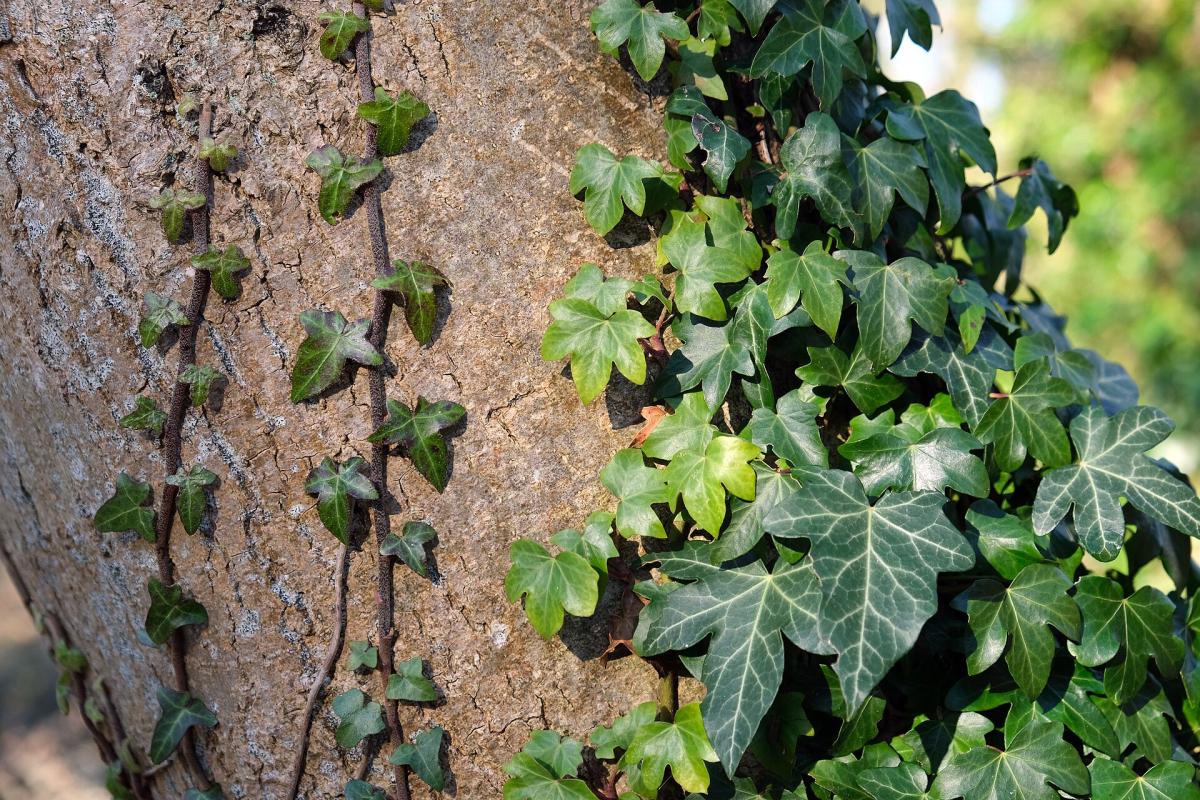
Flowers when almost nothing else does, and fruits when the birds most need it.
An evergreen climber with dark glossy leaves — lobed on climbing stems, plain and oval on flowering ones — that climbs walls and trees using short clinging roots. Ivy is abundant across the Dumfries area on trees, walls, banks and woodland floor. Its greenish flower heads open in autumn and the black berries ripen the following late winter.
Behaviour
The timing is what makes ivy so valuable. It flowers in September and October, when it is often the only significant nectar source left, drawing red admirals, wasps, hoverflies and ivy bees; and the berries ripen in February and March, the hungriest weeks of the year for blackbirds and wood pigeons. It is not a parasite — it clings for support and takes nothing from the tree.
When to see it
Quick facts
- Family
- Ivies (Araliaceae)
- Height
- Climbs to 30 m
- Status
- Native; abundant, and a critical late and early food source
Photo by kallerna, CC BY-SA 4.0, via Wikimedia Commons