Ivy-leaved Toadflax
Cymbalaria muralis
Print fact sheet (PDF)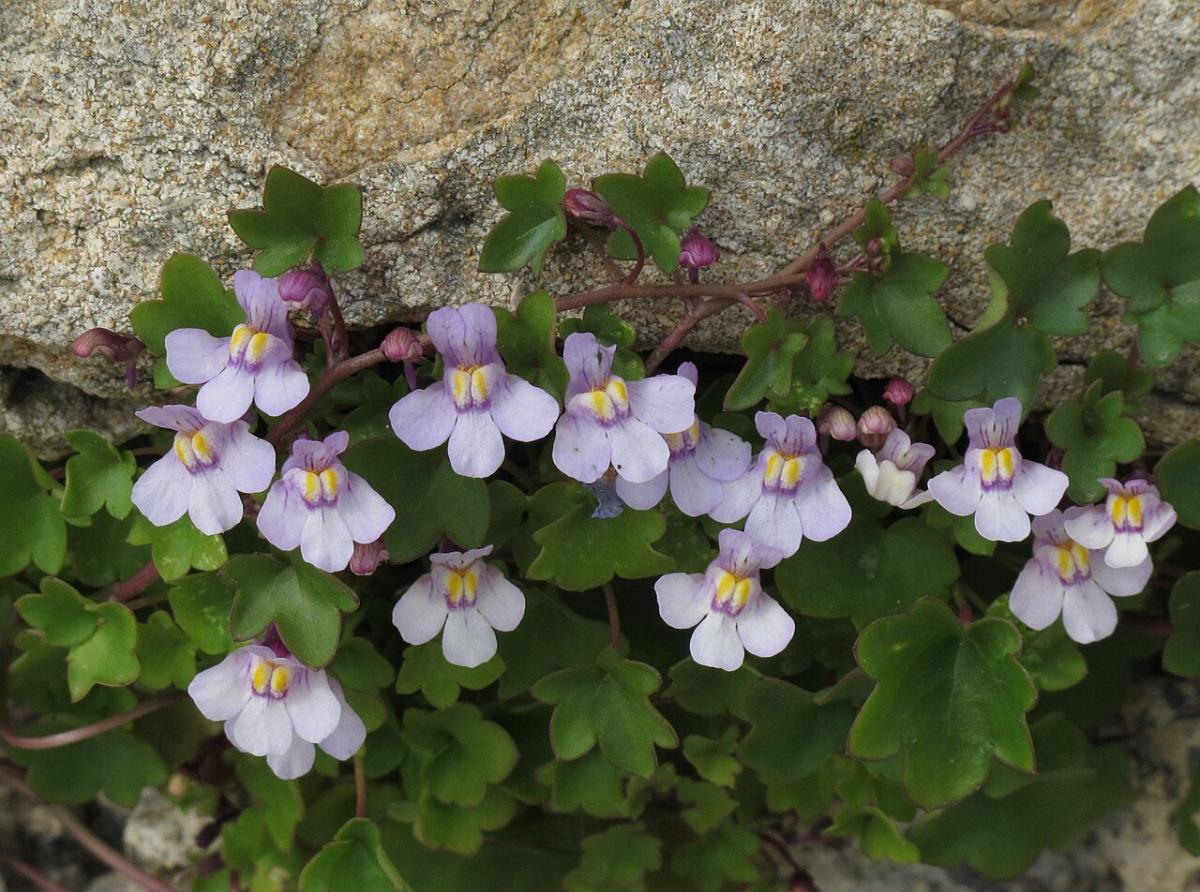
A tumble of tiny lilac snapdragons spilling from cracks in old stone walls.
Ivy-leaved toadflax is a trailing plant of walls, steps and paving rather than open ground, its ivy-shaped leaves and wiry stems creeping into the smallest cracks in old mortar. Introduced from southern Europe as a rock-garden plant, it escaped cultivation long ago and is now a familiar sight on Dumfries's older stone walls and bridges, in leaf and often in flower for most of the year.
Behaviour
Each small lilac-and-yellow flower turns to face the light while it is in bloom, then, once pollinated, bends its stalk away from the light and pushes the developing seed capsule back into dark crevices in the wall. This reversal wedges the plant's own seeds into fresh cracks to germinate, letting it colonise vertical stonework without any help from wind or animals.
When to see it
Quick facts
- Family
- Plantains (Plantaginaceae)
- Origin
- Native to southern Europe; naturalised in Britain since the 17th century
- Habitat
- Old walls, steps and stony ground
Photo by Robert Flogaus-Faust, CC BY 4.0, via Wikimedia Commons