Maidenhair Spleenwort
Asplenium trichomanes
Print fact sheet (PDF)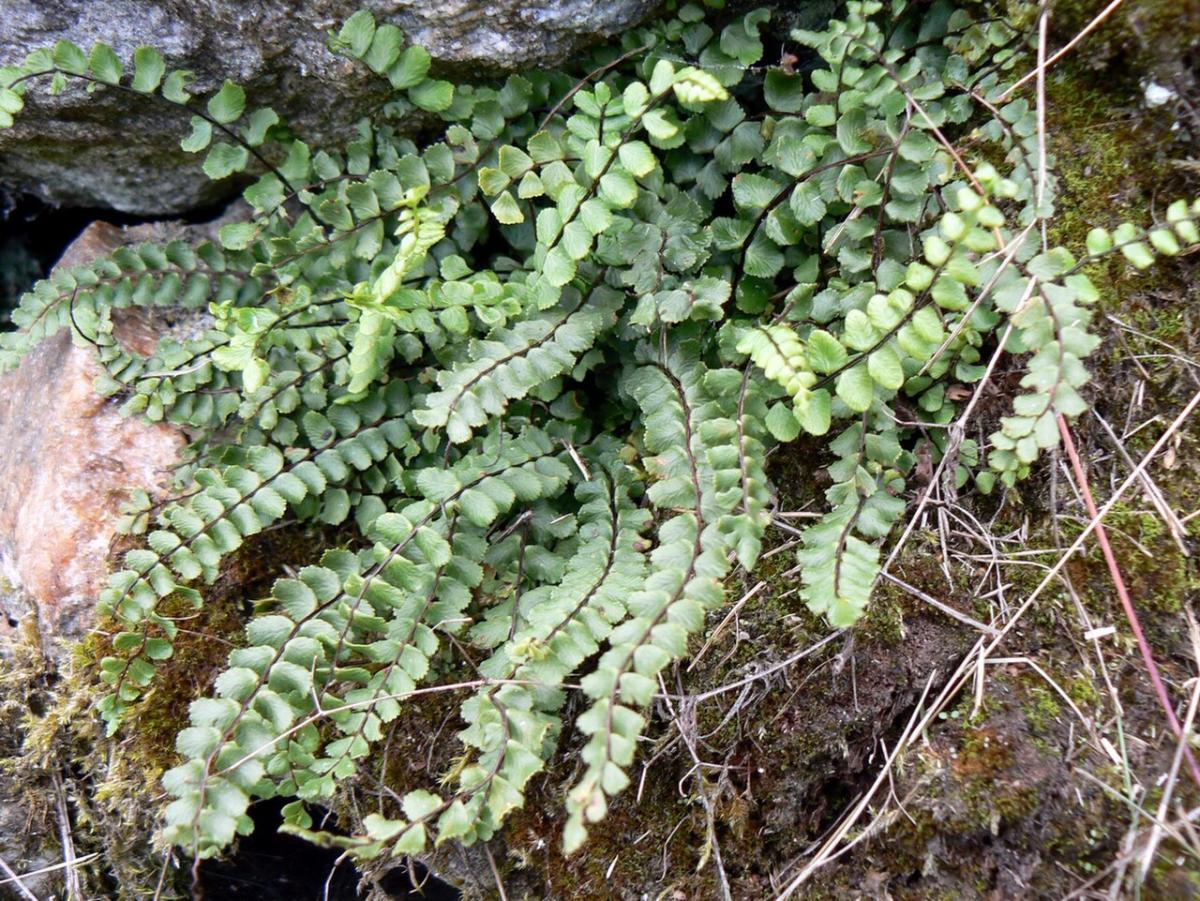
A miniature fern that thrives where almost nothing else can take root.
Maidenhair spleenwort is a small, tenacious fern that colonises the cracks and mortar joints of old walls, bridges and rocky outcrops across Dumfries, needing barely a pinch of soil to survive. Its fronds are unmistakable: slender, comb-like ribbons of small rounded leaflets set either side of a wiry, near-black midrib, the dark stalk contrasting sharply with the fresh green of the leaflets. Unlike the wildflowers around it, this fern doesn't flower or set seed — it reproduces from tiny spores released from rust-brown patches on the underside of mature fronds, usually through the summer months. Because it's evergreen, the same clumps of fronds stay visible in their wall crevices all year round, though they can look tired and browned after a hard frost before fresh growth pushes through in spring. Look for it on lime-mortared stonework, particularly older walls and bridge parapets around the town.
Behaviour
Rather than growing from soil, maidenhair spleenwort roots directly into thin films of mortar and rock crevices, drawing what little moisture and nutrients it needs from rainwater and dust trapped in the joint. Its spores are dispersed by wind from ripe sori on the frond undersides, allowing the fern to colonise new walls at a distance from the parent plant. Established clumps are slow-growing but long-lived, persisting on the same stretch of wall for decades.
When to see it
Quick facts
- Family
- Spleenworts (Aspleniaceae)
- Frond
- 5–15 cm, glossy black-green midrib
- Status
- Native; common on lime-rich walls and rock
Photo by Johan N, CC BY-SA 3.0, via Wikimedia Commons